Aircon Servicing Singapore 2026 Chemical Overhaul Explained
Why this matters for Singapore homeowners and offices
Singapore’s tropical climate means air conditioners work hard year-round. Regular aircon servicing Singapore isn’t just about comfort — it preserves energy efficiency, reduces breakdowns and improves indoor air quality. In 2026, the chemical overhaul (often called a chemical wash or deep clean) has become a go-to service for units that show persistent odours, reduced cooling or recurring leaks. This article explains what an aircon chemical overhaul is, why and when to choose it, what to expect, and how much it typically costs in Singapore.
What is an aircon chemical overhaul?
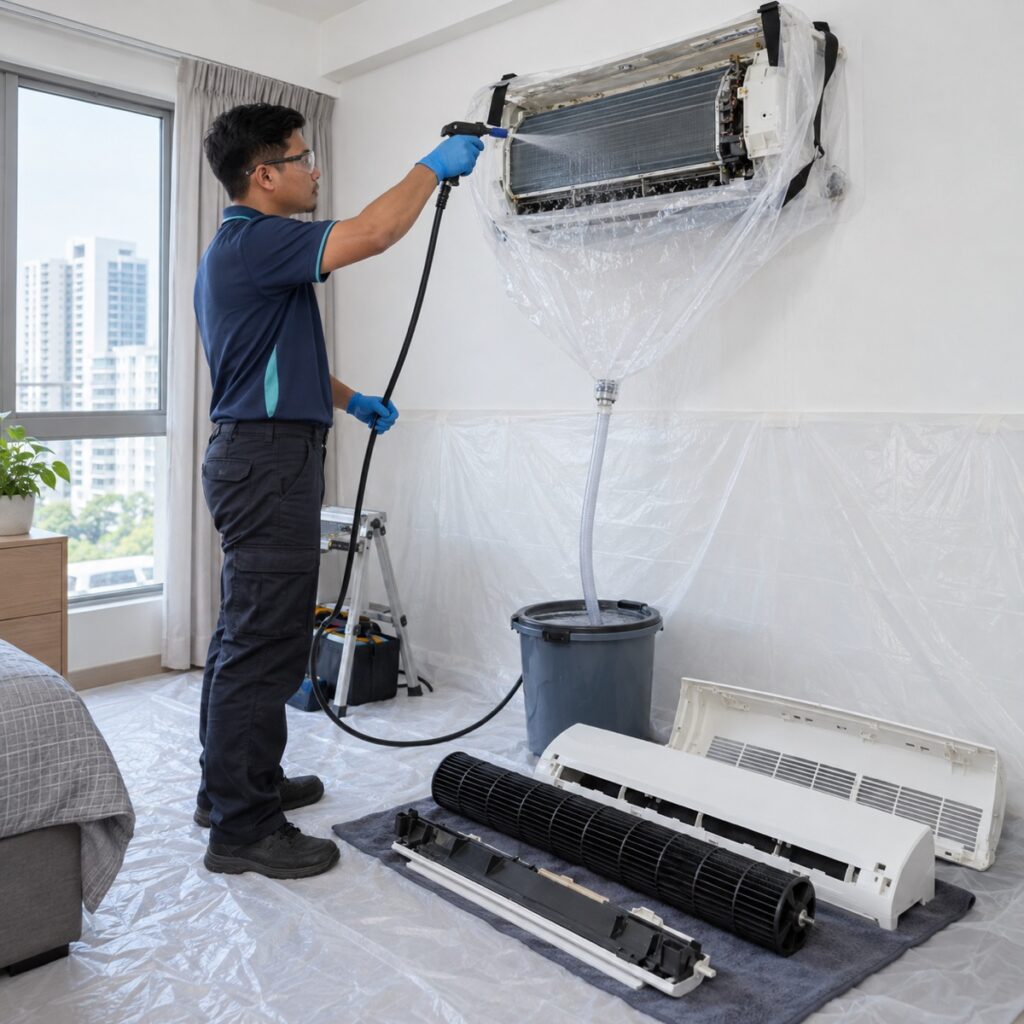
An aircon chemical overhaul is a professional deep-cleaning process for split-system and packaged air conditioners that uses specialised cleaning agents to remove stubborn dirt, grime, bacterial biofilm and grease from internal components. Unlike a routine cleaning that focuses on filters and a basic coil wipe, a chemical overhaul targets the evaporator coil, drain pan, blower wheel, casing and other hard-to-reach areas where contaminants accumulate.
Key components addressed during a chemical overhaul:
– Evaporator coil (removing scale and biofilm)
– Drain pan and drain lines (clearing blockages and disinfecting)
– Blower wheel and motor housing (removing build-up that reduces airflow)
– External condenser coil (where needed)
Benefits of a chemical overhaul for homes and offices
- Improved cooling performance: Removing build-up restores heat exchange efficiency, so the unit cools faster and more evenly.
- Energy savings: A cleaner aircon consumes less electricity for the same cooling output, which helps with rising energy costs in Singapore.
- Healthier indoor air: Chemical cleaning removes mould, bacteria and odour-causing residues that can exacerbate allergies.
- Fewer service calls: Deep cleaning reduces the risk of recurrent blockages and related faults.
- Extended equipment life: Less strain on components can delay costly replacements.
For commercial setups that require rapid fixes, many businesses opt for providers offering a same-day commercial aircon service to minimise downtime.
The chemical overhaul process — step by step
- Pre-inspection and diagnosis: A technician inspects the unit, checks coolant levels, and identifies areas of concern.
- Power isolation and dismantling: The unit is safely powered down and key panels and covers are removed to access internal components.
- Pre-cleaning: Filters and accessible dirt are removed to prevent cross-contamination.
- Chemical application: Approved cleaners are applied to evaporator coils, drain pans and other affected parts. Technicians choose agents based on grime type and material compatibility.
- Agitation and flushing: Brushes, steam or low-pressure rinses dislodge residues; rinse water and loosened grime are collected and disposed of per local guidelines.
- Disinfection: After cleaning, safe disinfectants neutralise microbes and prevent quick re-growth.
- Reassembly and testing: Units are reassembled, tested for airflow and cooling, and technicians check for leaks or operational issues.
- Final report and recommendations: A professional provider will share before/after photos and advise on follow-up maintenance.
When should you book a chemical overhaul?
- Persistent musty or mouldy odours that regular cleaning didn’t remove.
- Noticeable drop in cooling performance despite normal refrigerant levels.
- Frequent water overflow or blocked drain pan incidents.
- Visible mould or heavy grime during a basic inspection.
- After prolonged neglect (many months without servicing) or before peak hot months.
If you prefer to follow a structured maintenance plan, consult a provider who offers a clear aircon repair checklist so you can spot early warning signs.
Typical costs in Singapore (2026 estimates)
Costs depend on unit type (wall-mounted split, floor console, cassette, or ducted systems), severity of contamination, and whether additional repairs are needed. Typical price ranges in 2026:
– Single split unit (residential): S$120 – S$300
– Multi-split / commercial indoor unit: S$250 – S$600 per unit (or higher for complex ducted systems)
– Whole-office / ducted networks: Quoted after site survey
Prices can vary with promotions, package deals for multiple units, and emergency or same-day service premiums. For a current breakdown of service and installation costs, see a trusted local guide on aircon installation costs.
Note: Always ask for an itemised quote. A reputable company will separate labour, chemicals, parts and any warranty coverage.
Safety, environment and chemical choice
In 2026 there’s increasing emphasis on eco-friendly cleaning agents and safe disposal. Ask providers about:
– Chemical safety data sheets (SDS): Ensure the cleaners used are non-corrosive to coils and safe for indoor use.
– Wastewater management: Clean-out water must be collected and disposed of responsibly to avoid contaminating drains.
– Technician training and PPE: Technicians should use protective equipment and follow safe work procedures.
Providers that advertise greener options or lower-VOC cleaners are becoming more common. When possible, choose services that balance effectiveness with environmental responsibility.
DIY vs professional chemical overhaul
DIY cleaning can handle filters and superficial dust, but chemical overhaul requires expertise:
– Why not DIY: Chemical application needs correct dilution, thorough rinsing and component handling to avoid coil damage, electrical hazards or voiding warranties.
– Why choose professionals: Certified technicians have tools to access tight components, test for refrigerant issues, and conduct a safe, effective deep clean.
For homeowners seeking trustworthy residential help, look for companies with strong reviews in residential aircon repair expertise.
How often should you do a chemical overhaul?
For typical Singapore households and offices, recommended frequencies vary with usage:
– High-usage offices or commercial kitchens: every 6–12 months
– Heavy residential use or units in dusty/mould-prone locations: every 12 months
– Light-use residential units: every 12–24 months
If odours or performance issues appear earlier, schedule an inspection. Many providers bundle chemical overhauls with annual maintenance packages or promotional bundles — check for current aircon cleaning promotions.
Choosing the right service provider — checklist
- Verify credentials and insurance: Choose companies that display technician training, insurance coverage and transparent guarantees.
- Ask about chemical brands and SDS documentation.
- Request before/after photos and a written checklist of works performed.
- Get itemised quotes and warranty terms for workmanship and parts.
- Check turnaround time and availability for commercial clients — some providers offer prioritised or same-day commercial aircon service for urgent needs.
A short checklist to ask before booking:
– What exactly is included in the chemical overhaul?
– Are replacements (e.g., foam seals, drains) quoted separately?
– Is there a post-service performance test?
– What follow-up support is provided if symptoms return?
Risks and common misconceptions
- Misconception: Chemical overhaul fixes refrigerant leaks. It does not. Chemical cleaning targets contaminants, not refrigerant or major mechanical failures.
- Risk: Improper use of cleaning agents can corrode coils or damage electronic components. That’s why technician skill matters.
- Misconception: All chemical cleans are identical. Quality varies by product, method and technician competency.
If the issue is suspected to be mechanical (strange noises, constant tripping, or loss of refrigerant), book a diagnostic service rather than a chemical overhaul alone.
Trends shaping aircon servicing Singapore in 2026
- Eco-conscious chemicals: Lower-VOC and biodegradable cleaners are more widely used.
- Data-driven maintenance: IoT sensors and smart thermostats are enabling predictive servicing, so deep cleans happen when needed rather than on fixed schedules.
- Faster response for business: Same-day commercial options and flexible maintenance contracts help minimise operational disruption.
- Bundled service deals: More companies offer bundled annual maintenance plus chemical overhaul discounts for multi-unit properties.
If you manage a building or workplace, integrate regular inspections and an aircon repair checklist into your facilities plan to avoid surprises.
Final practical tips for homeowners and office managers
- Keep filters clean monthly — this reduces the need for more frequent deep cleans.
- Ensure good ventilation in rooms to limit moisture and mould formation.
- Maintain a service log: document dates, works done and any follow-ups — it helps technicians diagnose recurring problems faster.
- Compare at least two quotes and verify references before committing.
For tailored residential help or complex commercial systems, look for providers with proven residential aircon repair expertise and transparent pricing. Choosing the right chemical overhaul at the right time keeps your units efficient, your indoor air healthier, and your energy bills lower in Singapore’s demanding climate.