Aircon Service And Installation Costs Singapore 2026
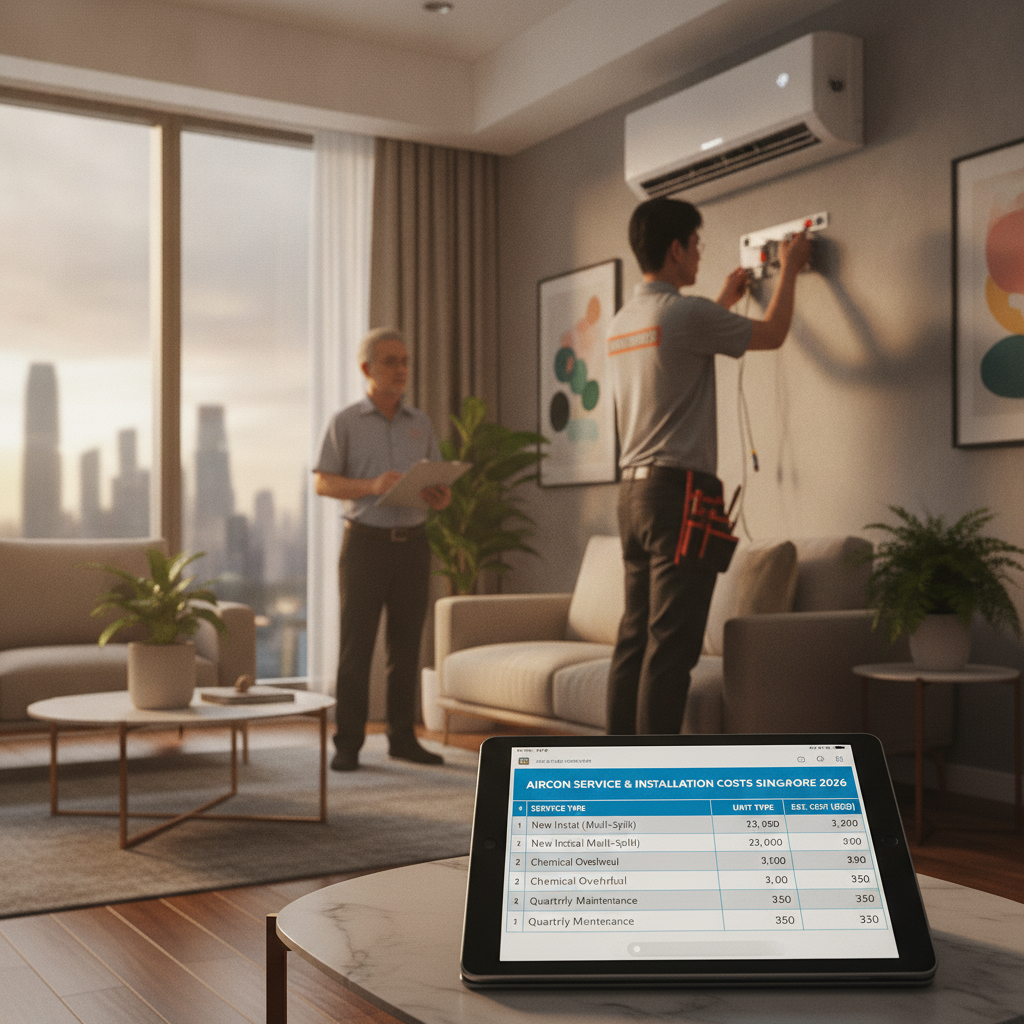
Why 2026 is a good year to plan your aircon service and aircon installation
Singapore’s humid climate keeps air conditioners running year-round. As we move through 2026, rising energy costs, evolving refrigerant rules and more efficient inverter technologies make planning for both regular air conditioning service and professional aircon installation more important than ever. This guide breaks down realistic price ranges, what affects costs, maintenance frequency for homes and offices, and practical tips to get the best value without sacrificing performance.
Typical air conditioning service costs in Singapore (2026 ranges)
Regular servicing keeps efficiency high, reduces breakdowns and extends unit life. Typical market ranges in 2026 are:
- Basic check-and-clean (per split unit): S$60–S$130 — includes filter cleaning, visual checks and blower inspection.
- Chemical wash / deep clean (per indoor + outdoor split combo): S$120–S$300 — for units with grease/mould or persistent odour.
- Coil cleaning / condenser service (per unit): S$150–S$350 — recommended when coils are heavily soiled.
- Refrigerant top-up / leak diagnosis: S$80–S$300+ depending on refrigerant type and leak complexity.
- One-off troubleshooting (labour-only, per visit): S$60–S$150.
- Maintenance contract (residential, annual plans): S$100–S$350 per unit per year; offices typically pay S$300–S$1,000+ depending on frequency and number of units.
Prices vary by company, complexity of access, unit model and whether parts are needed. For a servicing checklist and common repair items, see a professional air conditioning service.
Typical aircon installation costs (unit + installation)
Installation costs depend on unit type, capacity, site access and piping/wiring work. Typical 2026 price brackets for Singapore:
- Window or portable unit (unit + install): S$350–S$900.
- 1.0–1.5 HP split system (basic inverter): S$900–S$2,000 installed.
- 2.0–2.5 HP split system (inverter, higher star rating): S$1,400–S$3,000 installed.
- Multi-split systems (2–4 indoor units sharing one outdoor): S$3,000–S$7,000 depending on layout.
- Ducted / centralized systems: S$5,000–S$20,000+ depending on zones and ductwork.
Breakdown of typical installation charges:
– Labour and standard piping/drain set: S$200–S$800
– Copper piping and insulation (per metre): S$20–S$60 (longer runs increase cost)
– Brackets, supports, cable pulls, wall core drilling: S$50–S$300
– Additional refrigerant, leak testing or electrical upgrades: S$80–S$500+
A complete quote should clearly list unit model, labour, materials and warranty terms.
Factors that most affect cost
- Unit efficiency and brand: Inverter models and high star-rated units cost more upfront but save electricity long-term.
- Installation complexity: High balconies, long pipe runs, false ceilings or ductwork increase labour and material costs.
- Number of units: Bulk installations often attract package discounts.
- Access and permits: Some sites (e.g. older shophouses or condominiums) may need MCST approvals or special lifting equipment.
- Parts and refrigerant: Original parts and newer refrigerants can be pricier; older units needing compressor replacement are costly.
For expert guidance on residential repairs and correct replacement strategies, consult a residential aircon repair.
How often to service: homes vs offices
- Homes (HDB, condo, landed): Service every 4–6 months if used daily; twice a year for general upkeep. Heavy usage (pets, smokers, city dust) merits quarterly cleaning.
- Offices and commercial spaces: Quarterly or monthly checks depending on operating hours and criticality of cooling (server rooms, meeting rooms).
- After any smell, water leakage, reduced cooling or loud noise: schedule a service immediately to avoid bigger bills later.
A practical servicing routine improves energy efficiency and helps detect refrigerant leaks early — saving on expensive repairs and keeping warranties valid.
Choosing between basic service and chemical wash
Basic service is quick and affordable for routine upkeep; a chemical wash is recommended when:
– Unit has persistent odour or mould
– Cooling performance has dropped after basic cleaning
– Condenser or evaporator coils are visibly soiled
Chemical washes cost more but can restore efficiency significantly. For details on routine maintenance and a cheap, effective service approach see reputable aircon maintenance.
Energy and long-term cost considerations
- Upfront vs lifetime cost: A cheaper non-inverter unit may cost less initially but consume 20–40% more electricity annually. Calculate expected energy savings to justify higher upfront spend.
- Smart features and zoning: Modern units with smart thermostats or zoning capabilities can reduce energy bills in homes and offices.
- Refrigerant regulation: Keep installers who follow safe refrigerant handling and can certify compliance; this prevents fines and ensures environmental responsibility.
If you’re comparing installers or equipment specifications, an article on choosing HVAC companies can help you narrow trusted professionals with the right certifications and reviews. Review reliable HVAC tips before signing.
Warranty, after-sales and hidden costs to watch for
- Parts and labour warranty: Confirm length of warranty on both the unit and installation (commonly 1–5 years for parts; some compressors have longer warranties).
- Consumables and filter replacement: Ask whether filters and small parts are included in the service package.
- GST and surcharges: Ensure quotes state if GST is included and whether after-hours or emergency call-outs have premiums.
- Disposal fees: For old unit removal, clarify whether disposal or recycling is included in the installation price.
For budget-conscious options that still maintain quality, check providers with strong market reviews for affordable services such as best reviewed cheap aircon servicing.
Practical tips to reduce overall cost
- Pre-book off-season installs/servicing: Installers are less busy outside peak hot months and may offer discounts.
- Combine multiple units: Bulk servicing or multi-unit installation packages usually yield savings.
- Keep a simple maintenance log: Record service dates, parts replaced and who performed the work to preserve warranty claims.
- Inspect quotes carefully: Ask for itemised bills. Some contractors charge separately for materials that others include in the package.
- Consider energy-efficient upgrades: A marginally larger investment in an efficient unit often pays back in 2–4 years via lower electricity bills.
For a detailed servicing checklist to present to technicians or to use when evaluating quotes, consult a comprehensive air conditioning service.
Quick checklist before hiring an installer
- Licence and insurance: Confirm company registration, technician qualifications and insurance coverage.
- Written quote: Get itemised quotes with warranty details and expected completion dates.
- References and reviews: Ask for recent local references or check verified reviews.
- After-sales support: Verify emergency call-out response times and whether maintenance contracts are offered.
- Spare parts availability: Especially important for older units — ensure parts can be sourced locally.
Affordable, reliable options and evidence of track record are essential — check providers that specialise in local residential and commercial work for trusted service. Read a specialist guide on residential aircon repair to understand common failure modes and repair times.
When to replace rather than repair
Consider replacement if:
– Unit is older than 8–12 years and needs major parts replaced (compressor, PCB).
– Cooling efficiency has declined despite repeated servicing.
– Frequent refrigerant leaks occur, indicating deteriorating coils.
– Energy bills spike despite regular upkeep.
Replacing with a modern inverter model often yields better indoor comfort and lower operating costs. For cost-focused maintenance and replacement options, compare packages from reputable providers and consult providers that list competitive aircon maintenance.
Conclusion
Budgeting realistically for air conditioning service and aircon installation in Singapore in 2026 helps you avoid unwelcome surprises. Expect to pay modest sums for routine servicing and more for deep cleans, refrigerant work or complex installations. Prioritise licensed installers, itemised quotes and energy-efficient units to reduce lifetime costs. With careful planning—pre-season checks, multi-unit discounts and using trusted professionals—you can keep your home or office cool, efficient and cost-effective.
For a practical step-by-step checklist and vetted provider options, consult specialist local guides and compare multiple written quotes before committing.