HVAC Singapore Residential Aircon Service Checklist 2026
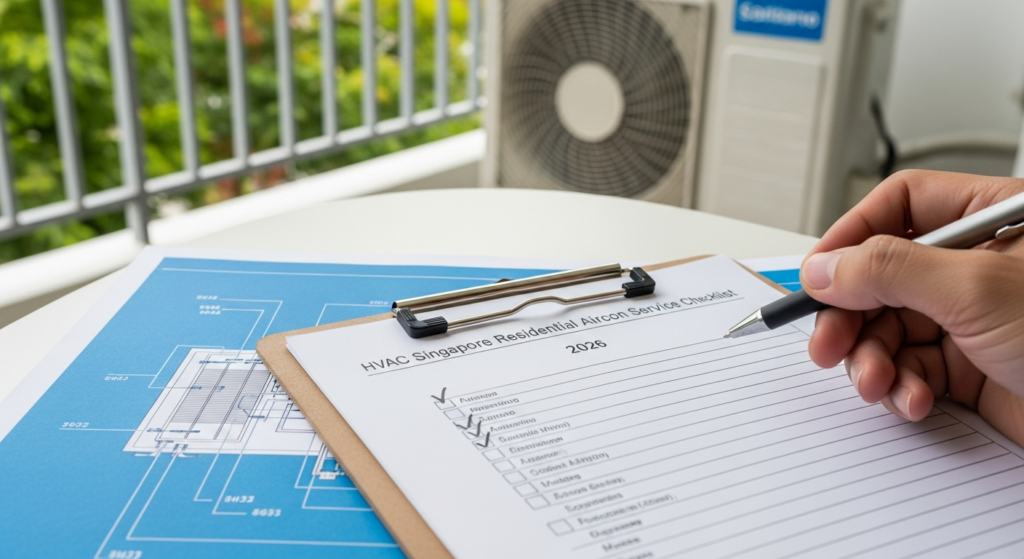
Why a 2026-focused checklist matters for Singapore homes and offices
Singapore’s tropical climate keeps aircon systems running year-round. In 2026, homeowners and office facilities face new expectations: higher energy-efficiency standards, greater emphasis on refrigerant management, and smarter controls that reduce costs and improve indoor air quality (IAQ). This checklist helps property owners, facility managers and homeowners prioritize maintenance tasks, choose the right service partner, and plan upgrades that cut bills and downtime.
Quick overview: frequency guide
- Monthly: basic filter and user checks (homeowners)
- Every 3 months: professional tune-up for high-use units (offices, commercial); at least biannual for typical condo/HDB
- Annually: full chemical clean/coil servicing and refrigerant leak inspection
- Every 3–5 years: system performance audit and control upgrades (consider inverter/variable-speed replacements)
Pre-service preparation: what to document
- Unit make, model and age
- Last service date and scope (filter clean, chemical wash, parts changed)
- Warranty and service contract details
- Any recent performance issues (weak cooling, strange noises, water leaks)
Keep photos of indoor and outdoor units and recorded room temperatures for technicians — this speeds diagnosis and creates a clear baseline for future servicing.
Monthly homeowner checklist (simple tasks you can do)
- Clean or vacuum washable filters: reduces strain on the compressor and improves IAQ. In heavily used units or dusty homes, do this every 2–4 weeks.
- Check condensate drain and tray: clear visible blockages and wipe away slime to prevent overflow and mould.
- Inspect remote and thermostat settings: ensure timers and energy-saving modes are active.
- Visual checks: look for ice on the evaporator coil, unusual condensate, or oil spots around joints.
For step-by-step cleaning hacks and quick fixes, see these essential aircon cleaning hacks: http://newcool.sg/aircon-service-singapore-essential-aircon-cleaning-hacks/.
Quarterly/professional tune-up checklist (recommended every 3 months for offices, 6 months for homes)
- Filter inspection and replacement (if needed): confirm filters are correctly seated and not damaged.
- Airflow and duct check: measure airflow and check for duct leaks or obstructions.
- Electrical system inspection: tighten terminals, measure current draw, and test capacitors and contactors.
- Refrigerant pressure check: detect leaks and top-up if necessary (handled by certified technicians).
- Drain line flush and trap check: professional flushing reduces bacterial growth and blockages.
Offices should consider a service contract that schedules quarterly visits and provides emergency callouts to keep comfort and productivity consistent.
Annual deep service and chemical cleaning (what pros should do)
- Indoor unit chemical coil cleaning (acid/coil cleaning): removes grime and restores heat exchange efficiency.
- Outdoor condenser coil cleaning and alignment: clears debris and verifies fan motor condition.
- Blower wheel and motor servicing: balance and lubrication if needed.
- Full refrigerant leak test and recovery handling: technicians should comply with refrigerant handling best practices and local regulations.
- System performance test: measure cooling capacity, energy consumption and run a trend report.
Many homeowners opt for an annual chemical clean promotion — compare options carefully and choose a vendor that documents before/after performance. See current promotions and scope examples here: http://newcool.sg/2026-singapore-aircon-chemical-cleaning-servicing-promotion/.
Office-specific additions for facility managers
- Indoor Air Quality monitoring: install CO2 or IAQ sensors in meeting rooms and open office areas to detect ventilation issues.
- Zoning and scheduling: use schedules and zoning to reduce runtime in low-occupancy areas.
- Preventive spares and inventory: keep common consumables (filters, belts, capacitors) in stock to reduce downtime.
- Compliance logs: maintain serviced logs for green building certifications and audits.
For smart controls and building-level HVAC tips, explore smart HVAC guidance here: http://newcool.sg/smart-hvac-singapore-residential-aircon-service-tips-2026/.
Energy-saving upgrades to consider in 2026
- Inverter compressors and variable-speed fans: these reduce start-up surges and match cooling to demand, lowering power use. Many modern split systems deliver 20–40% savings versus fixed-speed units.
- Smart thermostats and occupancy sensors: integrate with schedules and remote management to avoid needless runtime.
- High-efficiency replacement units with better SEER/EER ratings: weigh replacement cost versus payback period for units older than 10 years.
- Proper insulation and shading: external improvements (blinds, reflective films) reduce heat load and extend AC life.
For inverter-specific tips and repair knowledge, read this guide: http://newcool.sg/aircon-repair-expertise-hvac-singapore-inverter-tips-2026/.
Refrigerant and regulatory considerations (what to watch in 2026)
- HFC/HFO phase-downs: global and regional commitments are shifting refrigerant choices toward lower global-warming-potential (GWP) options. Ask your technician about the refrigerant type and any conversion or replacement options.
- Certified refrigerant handling: ensure technicians use proper recovery and leak detection equipment; good vendors provide documentation of refrigerant charges and recovery.
- Efficiency labeling and green incentives: check for any updated government or utility rebates for high-efficiency replacements or upgrades.
Document refrigerant type and service records — this protects resale value and helps with compliance.
How to choose a reliable residential aircon service provider
- Credentials and experience: look for technicians with HVAC training and local service track records in Singapore.
- Transparent pricing and itemised reports: avoid vague quotes; insist on scope, parts and what’s not included.
- Warranty on parts and labour: good vendors will guarantee work for a reasonable period.
- Safety and insurance: confirm public liability coverage for on-site work in multi-storey buildings.
- Reviews and references: cross-check customer reviews and ask for before/after performance metrics.
If budget is a concern, compare competitive service options but prioritise quality — cheap servicing that misses refrigerant leaks or tubing damage will cost more long-term. For a curated list of affordable but reliable servicing options, consider this comparison: http://newcool.sg/best-cheap-aircon-servicing-singapore-2026-guide/.
Common problems, quick diagnostics and when to call pros
- Weak cooling: could be low refrigerant, blocked coils, or failing compressor — call a technician after basic filter checks.
- Water leaks from indoor unit: frequently a blocked drain line or improper installation; clear the trap and call pro if leak persists.
- Strange noises: rattles, grinding or hissing suggest mechanical or refrigerant issues — stop the unit and arrange inspection.
- High energy bills: compare runtime and temperature settings; if runtime is excessive, schedule a system audit.
For advanced troubleshooting and repair best practices, see this deeper service and repair resource: http://newcool.sg/aircon-service-singapore-essential-aircon-cleaning-hacks/.
Post-service verification: what the technician should provide
- Itemised service report with before/after photos and performance readings
- Refrigerant charge records and leakage notes
- Parts replaced and serial numbers (if applicable)
- Recommended follow-up actions and schedule
Store reports digitally and create a calendar reminder for the next due service.
Budget planning and ROI: what to expect in Singapore
- Routine visits (filter + basic tune) are low-cost and yield immediate comfort benefits and lower energy use.
- Annual chemical cleans raise efficiency noticeably; track kWh usage before and after to quantify savings.
- Replacing an old non-inverter system may have 3–6 year payback in many Singapore households when energy savings and reduced repair costs are included. Prioritise units with strong warranties and local support.
Final checklist summary (printable)
- Monthly: clean filters, check drains, verify controls
- Every 3–6 months: professional tune-up (filters, electrical checks, airflow)
- Annually: chemical coil cleaning, refrigerant leak test, full performance audit
- Every 3–5 years: system audit and consider inverter or high-efficiency replacements
- Always: use certified technicians, keep itemised reports, and schedule preventive maintenance
A well-maintained aircon system is essential for comfort, productivity and energy costs in Singapore. Follow this HVAC Singapore residential aircon service checklist to protect investment value, improve IAQ and lower energy bills. Schedule routine inspections, prioritise smart upgrades, and keep clear service records to get the best out of your system in 2026 and beyond.