2026 Singapore Residential Aircon Chemical Cleaning Tips
Why regular maintenance matters in Singapore
Singapore’s tropical climate means air conditioners run year-round in most homes and offices. High humidity and warm temperatures create an environment where dust, grease and mould accumulate quickly on coils, filters and drainage systems. That buildup reduces cooling performance, raises electricity consumption and degrades indoor air quality (IAQ). Regular, professional maintenance—especially thorough procedures like aircon chemical cleaning—keeps units efficient, extends equipment life and helps protect occupant health.
What is aircon chemical cleaning and why it’s different
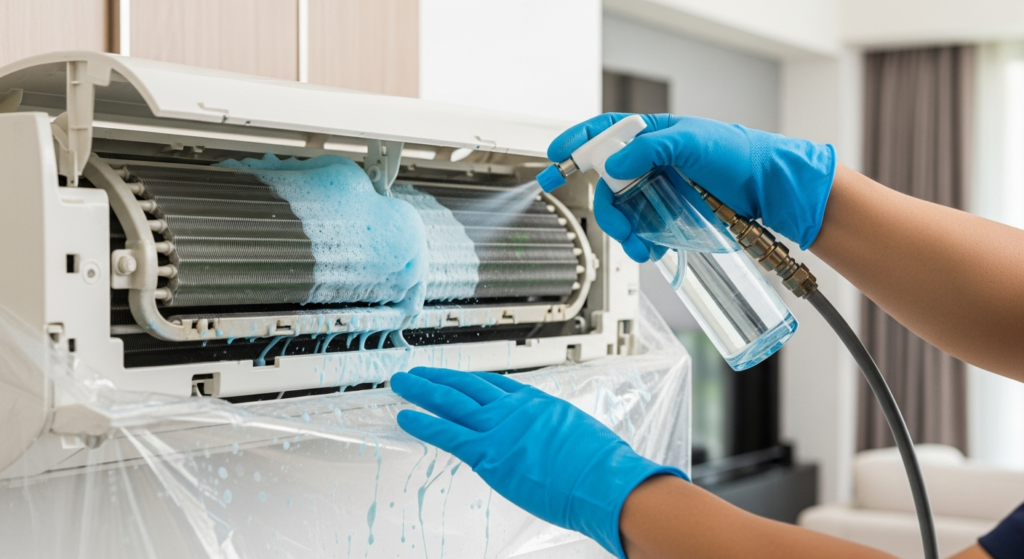
Aircon chemical cleaning is a deep-clean procedure that uses specialist detergents and controlled rinsing to remove stubborn grime, biological growth and oily residues from the evaporator coil, blower wheel and other internal components. Unlike standard residential aircon service that focuses on filters, refrigerant level checks and surface dusting, chemical cleaning targets the parts that ordinary servicing cannot reach, delivering measurable improvements in airflow and heat-exchange efficiency. Learn more about professional chemical cleaning methods and mould removal here: aircon chemical cleaning.
Step-by-step: What to expect during a residential aircon service chemical clean
A reputable team follows a clear, safe workflow:
- Pre-service inspection: check for leaks, refrigerant levels, electrical faults and overall condition.
- Protective setup: waterproof covers and tarpaulins to protect walls and furniture.
- Disassembly: outer casing, side panels and sometimes the blower wheel are removed for access.
- Filter cleaning: washable filters are cleaned; disposable filters are replaced if needed.
- Coil and blower chemical wash: eco-labelled chemicals are applied, left to break down grime, then rinsed thoroughly. This step is the core of the chemical clean.
- Drain and trap flush: chemical or mechanical cleaning to remove biofilm and prevent odours.
- Anti-mould treatment: optional coating or spray to inhibit microbial regrowth.
- Reassembly and testing: ensure airflow, cooling performance and safety checks are completed.
For a full checklist that residential and commercial customers can use, review this aircon cleaning guide.
How often should you schedule chemical cleaning?
Frequency depends on usage, environment and occupant sensitivity:
- Typical Singapore homes: every 12–18 months for units in normal use.
- High-use or dusty environments (open kitchens, seaside apartments, households with pets): every 9–12 months.
- Offices, retail spaces and commercial systems: every 6–12 months depending on hours of operation and occupancy.
- Allergy sufferers or households with infants/elderly: prefer annual checks and targeted chemical cleaning when odours or symptoms appear.
Weather events like prolonged haze or renovation dust can accelerate the need for cleaning. Many owners combine an intermediate basic service every 6 months with periodic chemical cleans to balance cost and performance.
Signs your unit needs immediate chemical cleaning
Watch for these red flags:
- Persistent musty or mouldy odours when the unit runs.
- Noticeably weaker airflow despite a working compressor.
- Longer run-times and higher electricity bills.
- Visible black dust on vents or sudden dust accumulation on furniture.
- Leaks from the indoor unit or blocked drain lines.
- Frequent icing or frost on older evaporator coils.
If you encounter any of these, schedule a professional inspection rather than attempting aggressive DIY chemical methods that can void warranties or damage coils.
Choosing the right residential aircon service provider in 2026
Selecting a trustworthy company is as important as the cleaning itself. Use these criteria:
- Credentials and insurance: technicians should be trained and the company insured against accidental damage.
- Transparent pricing and written quotes: clear scope, list of chemicals used and labour warranty.
- Chemical safety: providers should use biodegradable or low-VOC products and be able to show MSDS documentation.
- Experience with inverter units and modern compressors: incorrect handling can damage components.
- Documentation: before-and-after photos, test readings and a service report.
For reliable providers offering residential and commercial packages, including energy-conscious options, review available services such as the residential aircon service.
Cost expectations and return on investment (ROI)
Costs vary by unit type (wall-mounted split, floor console, cassette, multi-split) and service depth. As a rough guide in 2026 Singapore market terms:
- Basic residential servicing (filter clean, visual check): S$40–S$80 per indoor unit.
- Chemical cleaning for a single split unit: S$120–S$200 depending on extent of work and whether anti-mould treatment is included.
- Whole-home packages and multi-split systems: scale pricing often reduces per-unit cost.
ROI comes from lower electricity bills, fewer breakdowns and extended equipment life. Many homeowners find the payback period in reduced energy bills and avoided repairs is less than 18 months when chemical cleaning restores 10–20% efficiency losses.
Take advantage of seasonal deals and bundled packages; check current offers like the 2026 aircon cleaning promo for competitive pricing.
DIY maintenance tasks you should do (and what to avoid)
Safe DIY that helps prolong time between professional cleans:
- Clean washable filters monthly or every 4–6 weeks in high-use rooms.
- Keep outdoor condenser area free of leaves and debris.
- Regularly wipe the indoor casing and vents to reduce surface dust build-up.
- Run units on dry or ventilation mode during short wet spells to lower humidity inside the unit.
What to avoid:
- DIY chemical washes on coils or draining systems without proper training and containment.
- Spraying bleach or household cleaners into vents — this can corrode fins and void warranties.
- Opening refrigerant lines or tampering with compressor fittings.
For homeowners who prefer professional oversight, the right provider will clearly outline the difference between basic visits and a full chemical overhaul.
Office and commercial considerations: greener choices and compliance
Offices and commercial facilities have different demands: higher run hours, larger systems and stricter IAQ expectations. In 2026, businesses increasingly choose green options to meet sustainability targets and employee well-being goals. When selecting a commercial service, prioritise providers who:
- Offer low-impact chemicals and proper wastewater handling.
- Support modern refrigerants (R32 or newer low-GWP options) and can advise on retrofits.
- Provide energy-efficiency audits alongside cleaning to identify further savings.
For businesses seeking greener commercial maintenance options, explore dedicated programmes like green commercial aircon service.
Safety, regulation and environmental notes for Singapore homeowners
Safe chemical cleaning respects local regulations and environmental concerns:
- Wastewater containment: dirty rinse water must be captured and disposed of responsibly.
- Chemical handling: technicians should wear PPE and follow MSDS guidance.
- Refrigerant handling: refrigerants are controlled substances; only certified technicians should handle refrigerant charging or leak repairs.
Providers who adhere to these practices reduce environmental risk and protect your property.
Future-proofing your aircon maintenance strategy (2026 trends)
A few 2026 trends shaping how Singaporeans maintain aircon systems:
- Predictive maintenance with IoT sensors: sensors flag coil performance drops and suggest proactive cleaning before visible problems arise.
- Mobile-first booking and digital service records: apps let homeowners track service history and warranty periods.
- Greater uptake of low-GWP refrigerants and inverter-compatible cleaning practices to protect modern components.
- More emphasis on IAQ beyond cooling — particulate filtration, UV-C or photocatalytic options added to service bundles.
Work with providers who can integrate these options or advise you on incremental upgrades.
Quick pre-service checklist for homeowners and offices
Before your technician arrives, prepare the following to ensure a smooth job:
- Clear access to indoor units and outdoor condensers.
- Remove fragile items near indoor units and windows where tarps will be placed.
- Note any existing faults, odours or recent performance changes.
- Request a written quote and breakdown of chemicals and warranty.
- Ask for before-and-after photos and a service report for records.
If you’re comparing quotes, use checklist items to ensure apples-to-apples comparisons among providers.
Final note
Regular, professionally performed aircon chemical cleaning combined with routine residential aircon service keeps Singapore homes and offices comfortable, energy-efficient and healthier throughout the year. Prioritise qualified technicians, environmentally responsible chemicals and a clear service report to maximise the benefits of every visit. For detailed service packages and expert repairs tailored to 2026 needs, review available provider options and promotions as part of your maintenance plan.