Aircon Cleaning Checklist Ac Company Singapore 2026
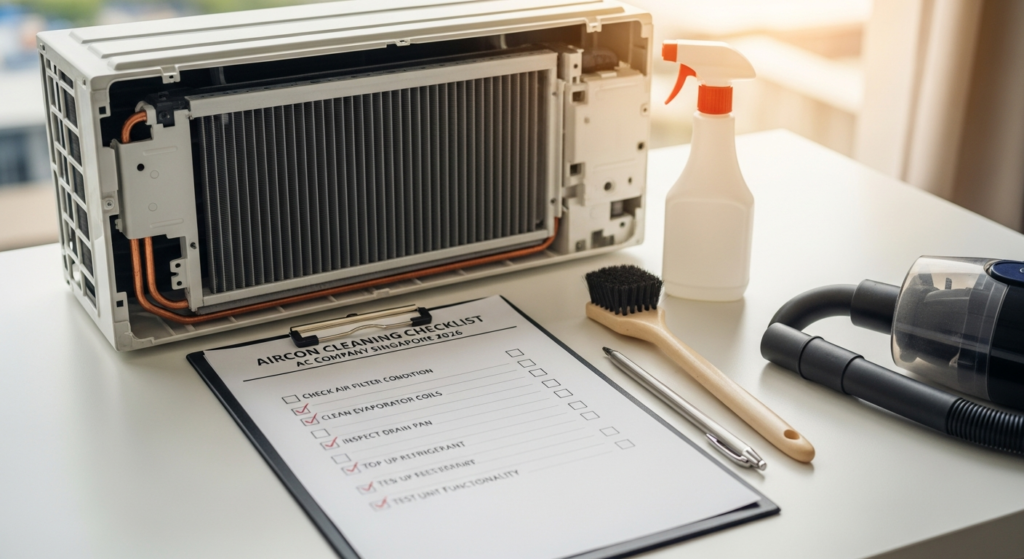
Why a local aircon cleaning checklist matters in Singapore
Singapore’s tropical climate makes air conditioning essential for comfort and productivity. High humidity and heavy daily use speed up dust accumulation, mould growth and reduced efficiency. For homeowners and office managers, following a clear aircon cleaning checklist helps maintain healthy indoor air, lower electricity bills and extend equipment life. Whether you’re managing a single split unit at home or a bank of FCUs in an office, a practical, Singapore-focused checklist keeps servicing efficient and cost-effective.
What “aircon cleaning” covers — scope and outcomes
Aircon cleaning goes beyond a quick wipe. A full cleaning and inspection should include:
- External casing cleaning and drain inspection
- Indoor evaporator coil cleaning and fin straightening
- Outdoor condenser coil cleaning and debris removal
- Air filter washing or replacement
- Condensate drain flushing to prevent blockages and mould
- Fan and motor inspection, lubrication where needed
- Refrigerant check (pressure and leaks) and electrical safety checks
- Basic performance test (temperature drop, airflow)
After proper cleaning you should notice improved airflow, faster cooling, less smell or mould, and a drop in energy consumption.
Pre-service checklist — prepare your home or office
Before the technician arrives, take these steps to make the job faster and safer:
- Clear access to indoor and outdoor units (furniture, plants, boxes)
- Note recurring smells, noises, or leaks and where they occur
- Check service records or warranty documents and have them ready
- If in an office, confirm access permissions and after-hours constraints
- Unplug or switch off the unit at the breaker if recommended by the company
Tip: Photograph the indoor unit and any visible signs of mould or leakage — this helps the technician plan and speeds up diagnostics.
Step-by-step aircon cleaning checklist (for split wall units)
- Safety and power-off verification.
- Remove and label remote batteries; switch unit off at main as needed.
- Remove and wash or replace filters. Filters can be vacuumed and washed with mild detergent; dry thoroughly.
- Open front panel and inspect evaporator coil. Use a specialist coil cleaner or request a chemical wash if heavily soiled.
- Clean drain tray and flush condensate drain line to remove biofilm.
- Inspect blower wheel and fan for dust buildup; clean with soft brush or compressed air.
- Check and straighten aluminium fins on the evaporator with a fin comb.
- Clean outdoor condenser coil and remove debris around outdoor unit.
- Inspect refrigerant lines and look for oil spots (possible leaks).
- Reassemble, run a performance test (temperature and airflow) and record outcomes.
For heavily fouled systems, technicians may perform a full chemical flush and deep clean — budget for this as a separate item.
Centralised systems and office AC checklist
For large offices and centralised systems (chillers, AHUs, FCUs):
- Coordinate with building management for lockout-tagout (safety isolation).
- Schedule aircon cleaning during low-occupancy hours to avoid downtime.
- Replace or clean large filters and pre-filters; consider MERV-rated upgrades if IAQ is a priority.
- Inspect and clean condensers, cooling towers and associated drain lines.
- Check sensors, thermostats and BMS integration for correct operation.
- Document refrigerant volumes, pressures and any remedial work.
Annual servicing and filter programs are essential for commercial systems to comply with workplace health and safety standards and to reduce productivity losses.
Tools, materials and safety to expect from an ac company singapore
Professional technicians should arrive equipped with:
- Protective covers and tarpaulins to avoid water and chemical damage
- High-pressure coil cleaner, vacuum, and coil brushes
- Fin combs, flashlights and diagnostic thermometers
- Personal protective equipment (gloves, masks, goggles)
- Water recovery gear for indoor chemical washes
- Electronic leak detectors and basic electrical testers
Always confirm your chosen ac company singapore follows safe chemical handling and disposal practices — illegal or improper disposal can attract fines and environmental issues.
How often should you clean your aircon in Singapore?
- Homes with normal use: clean filters every 1–2 months; professional servicing every 6 months.
- Homes with heavy use, pets or allergy sufferers: filters monthly; pro servicing every 4 months.
- Offices and commercial spaces: monthly filter checks and at least biannual professional servicing; some high-use sites require quarterly programmes.
Seasonality: Increase servicing frequency before the hotter months and after prolonged wet spells when mould risk rises.
Typical costs and what affects pricing (Singapore 2026)
Costs vary depending on unit type, accessibility and level of dirtiness. Indicative ranges:
- Basic split-system cleaning (per indoor unit): S$40–S$120
- Chemical deep clean or coil wash: add S$80–S$250 per unit
- Commercial/central system visits: quoted per site, often S$300+ depending on scope
Factors that increase cost: mould removal, condensate pump replacement, refrigerant top-up, motor/fan replacement, remote location or awkward access. Always get a written quote and a breakdown of parts vs labour.
For promotional or bundled deals, search for “aircon service near me” to compare current offers.
Choosing the right ac company singapore — what to ask
Ask potential vendors:
- Are you licensed and insured to work on refrigerant systems?
- Do you provide before-and-after photos and a written checklist?
- What chemicals/products do you use? Are they safe for indoor use?
- Do you offer maintenance contracts and performance guarantees?
- Can you accommodate off-hours servicing for offices?
Check reviews and ask for references, especially for commercial jobs. Compare the full scope of services: some companies bundle preventative maintenance, filter replacement programs and remote monitoring.
Explore options and verified providers via a specialist page for aircon cleaning and air-conditioning service.
New trends to consider in 2026 (energy, IAQ and tech)
- Smart maintenance: IoT-enabled thermostats and sensors report filter status and refrigerant performance, reducing surprise breakdowns.
- Indoor air quality: HEPA or upgraded filters and standalone UV-C or photocatalytic units are increasingly integrated to reduce bioaerosols.
- Energy efficiency: New inverter units and better heat-exchanger designs lower lifetime running costs.
- Eco refrigerants: HFC alternatives with lower GWP are becoming more common in new installations and retrofits.
If budget-conscious, look for promotions like cheap aircon cleaning but balance price with verified quality and warranty.
Common mistakes to avoid
- DIY chemical washes without proper containment — risk of water damage and electrical hazards.
- Neglecting condensate drains — blocked drains lead to hidden mould and ceiling damage.
- Using generic filters without checking compatibility — may reduce airflow or bypass.
- Hiring unlicensed technicians who cannot legally handle refrigerants.
Always insist on a written checklist and a clear scope of work.
Sample quick checklist for homeowners (printable)
- [ ] Switch off power to unit
- [ ] Remove and clean filters (vacuum + wash)
- [ ] Inspect indoor unit for black spots/mould
- [ ] Check and clear condensate drain
- [ ] Note unusual smells or noises
- [ ] Book professional service if coils are dirty or performance is poor
For one-off jobs or uncertain conditions, consult certified providers and compare quotes — look up verified companies under “best aircon servicing near me“.
When to call for repairs vs. cleaning
Call for a technical diagnosis if you notice:
- Continuous loss of cooling after cleaning
- Hissing or bubbling noises (possible refrigerant leak)
- Ice formation on evaporator coil
- Electrical tripping or burnt smells
A reliable provider will present repair options clearly and separate parts costs from labour. For trusted technical work, consider vendors who advertise aircon repair expertise.
Final checklist summary — a one-page guide
- Prepare space and document issues before service
- Clean filters monthly; pro service every 4–12 months depending on use
- Verify technician credentials and equipment
- Obtain written quote and before/after photos
- Track performance (kW vs. cooling) to spot degradation early
Following this structured aircon cleaning checklist will protect comfort, health and equipment value for Singapore homes and offices. Regular, documented servicing from a certified ac company singapore reduces downtime and energy bills while improving indoor air quality and occupant comfort.