When To Schedule Aircon Chemical Overhaul Singapore 2026
Why timing matters in 2026
Singapore’s climate keeps air conditioners running year-round. In 2026, rising focus on energy efficiency, indoor air quality and low‑GWP refrigerants means the right service at the right time is more valuable than ever. An aircon chemical overhaul is a deep clean and refresh that restores coil efficiency, removes stubborn grime and improves airflow — it’s not the same as a routine filter clean. Knowing when to schedule one saves money, cuts energy use and helps avoid unexpected breakdowns.
What is an aircon chemical overhaul?
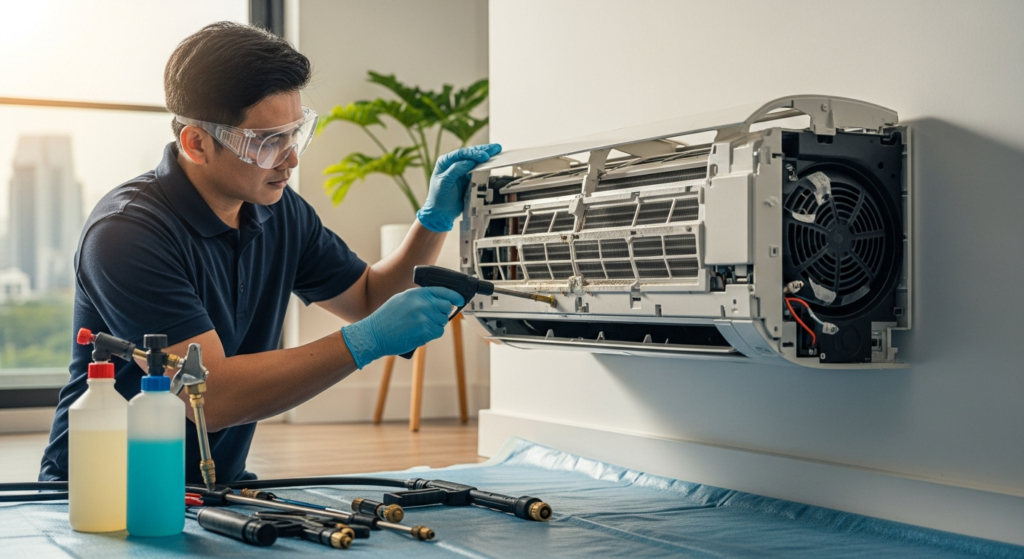
An aircon chemical overhaul (often called a CCO or chemical cleaning) is a thorough cleaning of the indoor evaporator coil and often the outdoor condenser, using specialist detergents and flushing techniques. Technicians remove dirt, bacterial build-up, oil residues and other contaminants that normal servicing can’t fully eliminate. The job typically includes: an assessment, coil cleaning with appropriate chemicals, acid/base neutralisation if required, flushing, reassembly, and testing. For heavily soiled units, parts like filters, drain pans or small components may be replaced.
How chemical overhaul differs from regular aircon servicing Singapore homeowners get
Routine aircon servicing Singapore providers usually offer filter cleaning, basic coil brushing, gas checks and a performance test. A chemical overhaul goes deeper:
- Routine servicing: monthly/quarterly cleaning of filters, visual checks, refrigerant top-ups when needed.
- Chemical overhaul: deep coil cleaning, chemical flushing, removal of stubborn grime, and restoration of heat‑exchange efficiency.
If routine servicing hasn’t fixed poor cooling or persistent odours, a chemical overhaul is often the next step.
Clear signs you need an aircon chemical overhaul
Book a chemical overhaul if you notice any of these:
- Persistent musty or mildew smells after filter cleaning.
- Noticeable drop in cooling performance despite normal refrigerant levels.
- Higher than usual electricity bills without a change in usage.
- Frequent short-cycling or unit tripping electrical protection.
- Visible mould, slime or black residue inside the indoor unit when panels are opened.
- Repeated condensate drain blockages or overflow stains.
For offices and multi-split systems, recurring complaints about smell or hot spots in meeting rooms are strong indicators that coils need deep cleaning.
Recommended schedule — general guidance for Singapore
Frequency depends on usage, environment and unit age:
- Light use (small flats, well-filtered environment): chemical overhaul every 3–5 years.
- Typical household/office use: every 2–3 years.
- Heavy use or polluted environments (near construction sites, heavy cooking, coastal salt air): annually or every 18 months.
Units older than 8–10 years often benefit from more frequent overhauls to prolong life and maintain efficiency.
Factors that affect timing and choice for homes vs offices
- Occupancy and hours: Offices running 12+ hours daily should schedule more frequently than homes used intermittently.
- Indoor air quality needs: Healthcare or sensitive environments require stricter schedules.
- Unit accessibility: Difficult-to-access ducts or ceiling cassettes may need longer planning and professional assessment.
- Warranty and lease terms: Check warranties — some manufacturers require authorised servicing intervals to keep validity.
Cost expectations and what influences price in Singapore
Costs vary by unit type and condition. Typical ballpark ranges in 2026 Singapore (approximate):
- Wall‑mounted split units: SGD 120–350 per unit for a chemical overhaul.
- Ceiling cassette / concealed systems: SGD 250–600 per unit due to access and extra labour.
- Multi-split systems: depends on number of indoor units; per-unit rate may be discounted.
Factors that influence price:
- Extent of contamination and repair work required.
- Number and type of indoor units.
- Accessibility (false ceilings, high ceilings, tight ducts).
- Use of eco-friendly cleaning agents and disposal fees.
- Inclusion of post‑clean performance testing and guarantees.
Always ask for a written scope and a before/after performance check. Many providers now offer same‑day aircon servicing and repair options for urgent cases; check availability in your area and confirm total cost upfront (same day aircon servicing and repair).
Step-by-step: what happens during a chemical overhaul
- Inspection and diagnosis: technician inspects coils, fans, drainage and electricals.
- Isolation and disassembly: unit panels and components are carefully removed.
- Pre-rinse: loose debris is flushed out.
- Chemical application: appropriate detergents applied to dissolve grease, biofilm and scale.
- Flushing and neutralisation: chemicals are rinsed away and neutralised to protect components.
- Drying and reassembly: components are dried, reassembled and tested for leaks.
- Performance check: temperature drop, airflow and noise levels are measured.
- Report and recommendations: technicians provide a summary and any follow-up suggestions.
Choose technicians who document pre- and post-clean readings to prove value.
2026 trends that affect scheduling and outcomes
- Low‑GWP refrigerants and retrofits: As the industry shifts to R32 and other lower‑GWP refrigerants, older units may require special handling during servicing. Discuss refrigerant type with your technician.
- IoT and predictive maintenance: Smart thermostats and sensors now monitor performance and flag coil fouling earlier, enabling condition‑based chemical overhauls rather than fixed schedules.
- Green cleaning agents: Suppliers increasingly use biodegradable, non-corrosive chemicals that protect coils and reduce waste disposal concerns.
- Same‑day options and service windows: Post‑pandemic demand for faster service means many companies offer flexible scheduling and same‑day slots for urgent needs; compare providers for best lead time and guarantees (cheap aircon servicing).
Selecting a trusted provider in Singapore
Checklist when choosing a contractor:
- Licensed technicians and clear insurance coverage.
- Transparent pricing and itemised quotations.
- References or online reviews from local homeowners and businesses.
- Use of compatible, non-damaging chemicals for your unit type.
- After-service performance verification and short-term service warranty.
For specialised chemical overhauls and detailed service packages, compare offerings and read the fine print about parts and refrigerant handling (aircon chemical overhaul and service). If you’re also thinking of replacing or installing units, check combo promotions that may include cleaning promos (aircon installation specials).
Practical tips to extend time between overhauls
- Clean or replace washable filters monthly; this reduces load on coils.
- Keep outdoor condensers free of debris and allow airflow around the unit.
- Reduce indoor pollutants (cooking fumes, heavy steam) with local exhausts.
- Run a short fan cycle daily to prevent condensate stagnation in humid weather.
- Schedule a thorough check before the hotter months to avoid peak-season delays.
For comprehensive maintenance plans that combine routine checks with periodic deep cleans, look into reputable maintenance providers offering customised schedules (top aircon maintenance and aircon repair).
Safety, warranties and environmental considerations
- Ensure chemicals used are compatible with your unit to avoid warranty voiding.
- Proper disposal of chemical runoff is important; reputable companies handle effluent responsibly.
- For older units, assess whether recurring overhauls are cost-effective versus replacement with a modern, more efficient model.
Quick decision guide
- Schedule a chemical overhaul now if: your unit emits persistent smells, cooling is reduced, or energy bills have jumped.
- Consider a check-up and possible overhaul before the hottest months to avoid breakdowns.
- For peace of mind in offices, include chemical overhauls in your preventive maintenance calendar, especially in high-occupancy zones.
Conclusion
A timely aircon chemical overhaul in Singapore restores performance, improves indoor air quality and reduces long‑term energy costs. In 2026, smarter maintenance choices — using eco-friendly chemicals, leveraging sensors for predictive servicing and choosing reputable providers — will get you the best results. Book a certified inspection and document pre- and post-clean performance to ensure you’re getting value and a longer, healthier life from your air conditioning systems.