Aircon Maintenance 2026 Guide For HVAC Singapore Owners
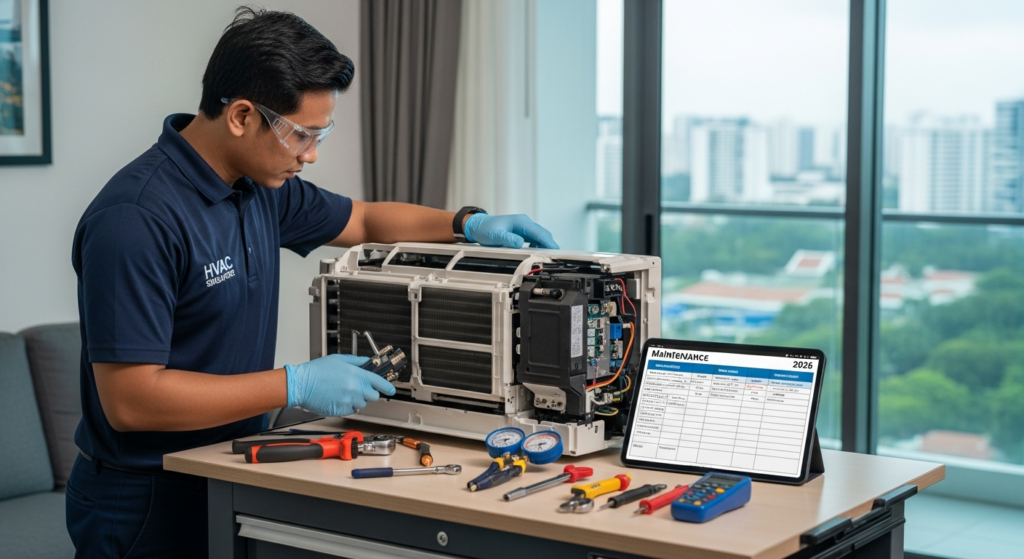
Why aircon maintenance matters in Singapore
Living and working in Singapore means air conditioning is not a luxury — it’s essential. Regular aircon maintenance keeps homes and offices comfortable, reduces electricity bills, prevents unexpected breakdowns, and improves indoor air quality. For hvac singapore owners, 2026 brings new trends (R32 refrigerants, smarter controls, and predictive servicing) that make planned maintenance more valuable than ever.
The 2026 trends every Singapore owner should know
-
R32 and low-GWP refrigerants: Many newer units use R32, which is more energy-efficient and has a lower global warming potential than older refrigerants. Maintenance technicians now need training for R32 service and leak detection methods. Learn how to handle R32 in your aircon service R32 maintenance tips.
-
Inverter compressors and smarter controls: Inverter technology saves energy by varying compressor speed. Paired with programmable thermostats or smart controllers, systems run more efficiently and require fine-tuned maintenance.
-
Predictive and IoT-enabled servicing: Sensors and connectivity allow proactive fault detection and scheduling of servicing before failures — ideal for multi-unit residential blocks and commercial offices.
-
Health-focused filters and ventilation: Post-pandemic awareness and haze events have driven demand for higher-efficiency filters and combined filtration+ventilation strategies for offices and homes.
Simple quarterly checklist for homeowners
Do these quarterly to keep performance high and reduce wear:
- Clean or wash washable filters. Clogged filters restrict airflow and force the compressor to work harder.
- Inspect outdoor unit for debris, leaves, and obstructions. Trim plants and remove dirt build-up.
- Check for unusual noises and vibrations. Note when sounds start so technicians can diagnose properly.
- Wipe indoor unit surfaces and ensure drains are free of blockages to prevent water overflow and mould.
These DIY steps take 15–30 minutes per unit and prevent many common issues.
Biannual and annual checks (when to call pros)
For best longevity, schedule a professional service every 6–12 months:
- Coils cleaning (evaporator and condenser): Dust and grime reduce heat exchange efficiency. Professional coil cleaning restores capacity.
- Refrigerant level and leak test: Low refrigerant lowers cooling and may indicate a leak. Certified technicians can pressure-test and repair leaks.
- Electrical and safety checks: Ensure wiring, capacitors, and contactors are in good condition to avoid failures and fire hazards.
- Fan and motor inspection: Bearings, belts (where fitted), and motor health affect airflow and efficiency.
- Drain-line treatment: Chemical flush or mechanical clear to prevent mould and odours.
For residential reliability, aim for an annual deep service; for high-use systems (large families, small offices), choose biannual visits.
Office HVAC: best practices for multi-unit and commercial systems
Offices have higher cooling loads and continuous operating hours. Steps to protect uptime and indoor comfort:
- Service contracts: Establish a preventive maintenance plan with defined SLA response times.
- Filter strategy: Use a combination of pre-filters and higher-efficiency filters for better particulate capture. Consider mechanical ventilation and dedicated outdoor air systems for improved air exchange.
- Zoning and controls: Zone thermostats and meters help balance comfort with energy consumption across floors.
- Monitoring and building management systems (BMS): Integrate HVAC into your BMS for real-time alerts and remote diagnostics.
For professional commercial support, consider providers experienced in aircon repair expertise Singapore 2026 energy-saving guide.
Energy-saving tips that complement maintenance
- Raise thermostat by 1°C — small comfort trade-offs can reduce consumption by 6–10% annually.
- Use ceiling fans to allow a higher thermostat setpoint without losing comfort.
- Shade outdoor units from direct sun where possible to improve condenser performance.
- Keep door and window seals tight to reduce cooling loss.
- Schedule heavy cooling for off-peak times when feasible and allowed.
For tailored energy-efficient installation and cleaning advice check this aircon installation and cleaning guide.
Choosing a service provider in Singapore: what to check
- Certification and licensing: Ensure technicians are certified for refrigerant handling and electrical work.
- Experience with your refrigerant type (R32 vs R410A): Different gases require specific handling and tools.
- Transparent pricing and written reports: Good providers deliver condition reports and recommendations after service.
- Warranty and parts policy: Ask about warranty on replaced components and whether original equipment manufacturer (OEM) parts are used.
- Local references and response time: For offices, quick response minimizes business disruption.
If you’re comparing providers, see curated options for residences in the best residential aircon maintenance services Singapore 2026.
Cost expectations (approximate, SGD)
- Basic tune-up and filter clean: SGD 60–150 per unit
- Chemical wash / deep clean: SGD 150–350 per unit depending on model and accessibility
- Leak detection and refrigerant top-up: SGD 100–400+ depending on refrigerant type and leak repairs
- Major parts replacement (PC board, compressor): variable — often SGD several hundred to over a thousand
Prices vary by model, complexity, and building access. Get itemised quotes and compare service scopes rather than cheapest price alone.
Handling common problems and quick fixes
- Weak cooling: Check filters, ensure outdoor unit clear, and verify thermostat setting. If persistent, call a technician to test refrigerant and system pressures.
- Water drips indoors: Likely a blocked condensate drain. Try clearing visible debris; persistent issues need a professional clean and treatment.
- Unusual smells: Could be mould in the blower or drip pan. Schedule a deep clean and consider anti-microbial treatments.
- Strange noises: Loose fan blades, worn bearings, or debris can cause sounds. Shut down and inspect; arrange professional inspection for electrical or mechanical faults.
Health and IAQ considerations for Singapore climates
Humidity control is as important as temperature. Regular maintenance reduces mould and microbial growth in ducts and drip pans. For households with allergy or asthma sufferers, upgrading to high-efficiency filtration and adding a standalone HEPA purifier to bedrooms can be helpful. Offices should consider periodic indoor air quality assessments, especially in dense or enclosed spaces.
Preparing for heavy-use seasons and events
- Haze season and prolonged warm spells: Increase filter replacement frequency and consider higher-grade filters.
- Long public holidays or vacancy: Shut down systems properly or put them on a minimal ventilation schedule to avoid mid-vacancy issues.
- Pre-monsoon check: Inspect outdoor units for secure mounting against storms and ensure drainage is clear.
Sustainable upgrades worth considering
- Switch to inverter models if replacing units — lower life-cycle costs and better part-load performance.
- Add smart controllers to manage temperature remotely and create schedules that match occupancy.
- Retrofit variable-speed drives on large fan motors for commercial systems to save energy.
- Consider hybrid approaches: demand-controlled ventilation and energy recovery ventilators in larger buildings for improved efficiency.
For homeowners looking into comprehensive residential solutions, explore options on residential aircon service and energy tips.
Final checklist before you call a technician
- Note model and refrigerant type (R32, R410A, etc.).
- Record symptoms: noises, drip locations, when problem occurs (time of day, after rain, etc.).
- Clear access to indoor and outdoor units to save on labour time.
- Ask for a written report and recommended next steps.
Closing guidance
Consistent aircon maintenance is the most cost-effective way to protect comfort and control operating expenses in Singapore’s climate. Adopt simple quarterly habits, schedule professional servicing annually or biannually, and plan for the 2026 shifts: R32 service knowledge, smarter controls, and predictive maintenance. Proactive action reduces downtime and keeps both homes and offices running efficiently.
For professional cleaning, installation, and maintenance options tailored to Singapore conditions, consider providers listed in the guides above and lock in a preventive maintenance plan suited to your property.