Aircon Service Singapore 2026 Aircon Cleaning Guide
Why this guide matters in Singapore
Singapore’s humid, tropical climate makes air conditioning an essential part of home and office life. Regular maintenance and proper aircon cleaning not only improve comfort and indoor air quality but also reduce electricity bills, extend equipment life, and prevent unexpected breakdowns. This guide explains what to do in 2026 — from quick DIY checks to when to call professionals for full service.
The real benefits of regular aircon cleaning
- Health: Dust, mould and bacteria thrive in poorly maintained units. Routine cleaning reduces allergens and improves indoor air quality for families and office staff.
- Efficiency: Dirty coils and clogged filters force compressors to work harder. Professional cleaning can restore cooling efficiency and lower energy use.
- Reliability: Regular servicing catches leaks and wear before they become costly repairs or downtime.
- Lifetime and resale value: A well-maintained system lasts longer and retains value for homeowners and property managers.
How often should you schedule aircon service singapore?
Frequency depends on usage, location and system type, but typical recommendations for Singapore are:
- Homes (HDB/condo): General servicing every 6 months; deep chemical overhaul every 12–24 months depending on usage.
- Landed houses with dusty outdoor environments: Service every 4–6 months.
- Offices and commercial spaces: Quarterly inspections; thorough cleaning at least twice a year due to higher load and occupancy.
Watch for these signs between services: weaker airflow, strange noises, higher electricity bills, water leaks or persistent odours. If you notice rapid drops in performance, consider same day aircon servicing to avoid operational disruption.
What a professional aircon cleaning/service includes
A reputable technician will provide a checklist-like service that may include:
- Inspection of indoor and outdoor units, wiring and mounting brackets.
- Removal and thorough cleaning of filters and panel components.
- Chemical coil cleaning to remove mould and scale (important for long-term efficiency).
- Cleansing of the drain line and drip tray to prevent blockages and odour.
- Checking refrigerant levels and identifying leaks.
- Testing fan motors, thermostats, and remote control operation.
- Performance test and advice on improvements.
For systems needing more than a surface clean, ask about a full aircon chemical overhaul. This service uses targeted chemicals and pressure-wash techniques to restore coil performance.
DIY aircon cleaning checklist (safe and effective)
Before attempting DIY cleaning, switch off the power at the isolator. If you are unsure, call a pro.
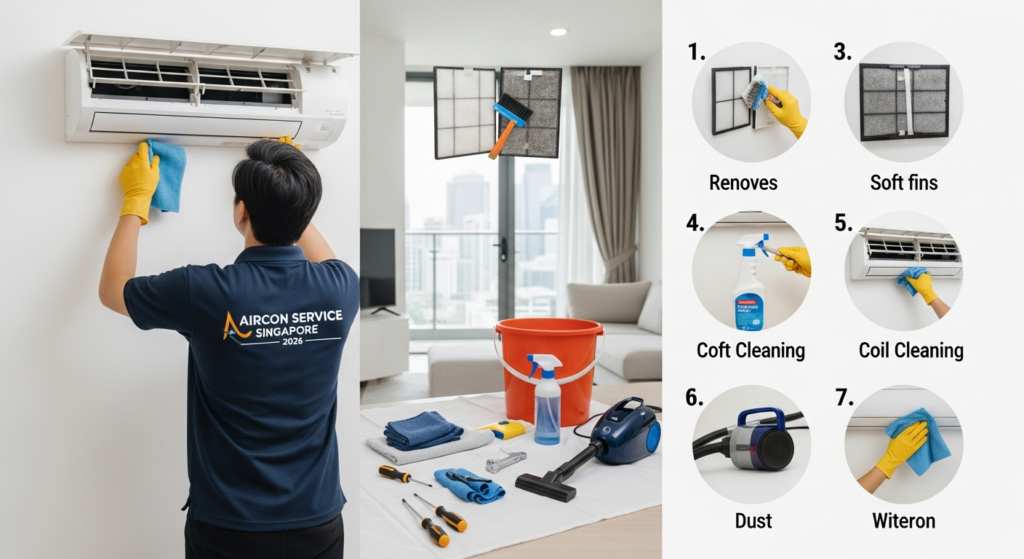
- Clean or replace filters monthly if you run the AC daily. Wash with soapy water and allow to dry completely.
- Wipe the outer casing and vents to remove surface dust.
- Clear leaves and debris from the outdoor unit and ensure at least 30cm clearance for airflow.
- Check and flush the condensate drain pipe if you see water backing up or smell odour.
- Use a soft brush or vacuum with a brush attachment for the blower and fan louvers (indoor unit) if accessible.
Avoid opening sealed parts of the unit or handling refrigerant lines — these should be left to certified technicians.
When to choose a chemical overhaul vs regular cleaning
- Regular cleaning: ideal for filter cleaning, surface grime and minor coil dust.
- Chemical overhaul: recommended if your unit has persistent odours, heavy mould, or a significant drop in performance despite routine servicing. For a decision guide, read about when to schedule aircon chemical overhaul.
A chemical overhaul can restore capacity and reduce energy waste, but it’s more intensive and should be performed by experienced technicians.
How much does aircon service and cleaning cost in Singapore (2026)?
Costs vary by system type (wall-mounted split, multi-split, ducted VRF) and required scope:
- Basic servicing for one split unit: typically SGD 40–80.
- Chemical overhaul for split units: around SGD 100–250 per unit depending on complexity.
- Office or ducted systems: get a site quote — central systems are more expensive and often priced per inspection and per service item.
Promotions and bundled servicing are common. For budget-conscious homeowners, check reputable deals like aircon cleaning packages that pair basic servicing with discounts for multi-unit bookings.
Choosing the right aircon service provider
Ask potential providers for:
- Licence and certifications for handling refrigerants (in Singapore, certified technicians are required for refrigerant work).
- Clear breakdown of what’s included, and an itemised quote.
- Warranty for labour and parts (ideally 30–90 days minimum for service work).
- References, reviews and local experience — especially for commercial or complex installations.
Consider providers who offer transparent reporting and photos after work is completed. If you need urgent help, consider providers that offer same day aircon servicing.
Energy savings and ROI from cleaning
Cleaning and maintenance translate into measurable savings. Typical impacts:
- A dirty coil can reduce efficiency by up to 10–20% depending on buildup; cleaning often restores a large portion of that loss.
- Example (illustrative): a 1.5 HP split AC consuming ~1.4 kW running 8 hours/day uses ~11.2 kWh/day. Improving efficiency by 10% saves ~1.12 kWh/day — roughly SGD 0.30–0.50/day depending on tariff, which adds up over months.
Regular servicing also avoids sudden compressor failures — the most expensive component to replace.
Office and commercial considerations in 2026
Offices have higher cooling loads, so maintenance schedules and monitoring should be proactive:
- Use building management systems (BMS) or IoT sensors to track performance and detect anomalies early.
- For multi-split and VRF systems, contract a specialist familiar with system balancing, refrigerant charging, and controller integration.
- Consider preventive maintenance contracts that include regular inspections, seasonal tune-ups and emergency response SLAs.
For comprehensive business-focused maintenance, evaluate options like aircon service singapore providers that specialise in commercial systems.
2026 trends: smarter maintenance and greener choices
- IoT sensors: Smart thermostats and sensors increasingly identify drops in efficiency and trigger maintenance reminders.
- Inverter technology: Most modern units have inverters which are more efficient but benefit from regular checks on refrigerant and electronic controls.
- Eco-friendly refrigerants: Newer refrigerants reduce environmental impact; validate that your technician uses approved materials and safe handling.
- Service subscription models: Many homeowners and offices opt for subscription maintenance plans for predictable costs and priority service.
Quick troubleshooting tips before you call a technician
- Weak cooling: Clean filters and check outdoor unit clearance. If problem persists, call a pro for a refrigerant check.
- Water leaks: Check and clear the condensate drain; if the error continues, get immediate service to avoid water damage.
- Bad odours: Often caused by mould in the drip tray or coils — chemical cleaning may be required.
- Excess noise: Loose fan blades or worn bearings need professional attention.
If problems persist after basic checks, book a professional service quickly to avoid further damage.
Final checklist for homeowners and offices
- Replace or clean filters monthly if you use the AC daily.
- Schedule professional servicing: every 6 months for homes, quarterly inspections for offices.
- Book a chemical overhaul if odours, mould or performance issues persist. See guidance on aircon chemical overhaul.
- Compare quotes and confirm licences, warranties and scope before engaging a contractor.
- For urgent breakdowns or business continuity needs, prioritise providers offering same day aircon servicing.
Keeping your aircon clean and well-serviced in 2026 protects health, reduces bills and prolongs the life of your system. Whether you follow the DIY checklist or schedule professional maintenance, consistent action pays off in comfort, cost savings and fewer disruptions.