Commercial Aircon Service HVAC Singapore Energy Savings
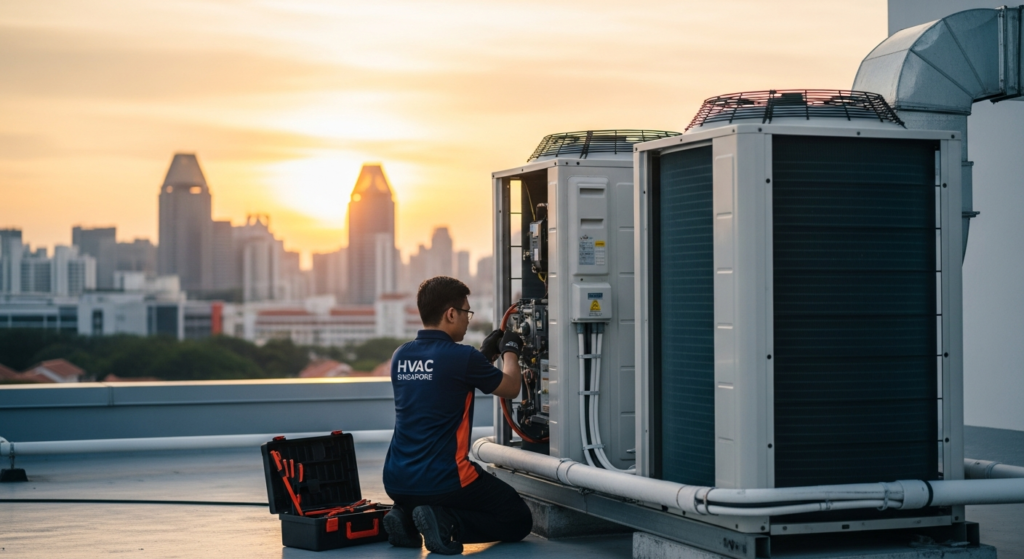
Why energy-efficient commercial aircon service matters in Singapore
Singapore’s tropical climate makes air conditioning a daily necessity for homes and offices. For commercial properties, inefficient HVAC systems drive up electricity bills, reduce equipment lifespan, and increase carbon emissions. A proactive commercial aircon service strategy not only improves comfort and indoor air quality, it directly reduces operating costs — often by double-digit percentages when paired with targeted upgrades and smart controls.
This article explains practical ways homeowners and office managers in Singapore can get the most energy savings from their air conditioning systems through maintenance, technology choices, and smarter operations.
The energy impact of poor HVAC upkeep
Neglected aircon systems consume more power because dust-clogged coils, blocked filters, refrigerant leaks, and worn components force compressors and fans to work harder. Typical impacts include:
- 10–30% higher energy use from dirty filters and coils
- Shorter equipment life and higher repair frequency
- Reduced comfort and uneven temperatures, prompting lower setpoints and increased runtime
Regular commercial aircon service addresses these inefficiencies and stabilises performance, recovering lost capacity and reducing energy draw.
Quarterly and annual maintenance checklist for energy savings
A structured servicing program makes energy savings predictable. Key items every building owner or facility manager should require:
- Filter cleaning or replacement (monthly for dusty environments; quarterly for controlled offices)
- Coil cleaning and inspection (annually, or every 6 months for coastal or industrial sites)
- Refrigerant charge and leak detection to ensure correct pressures
- Fan and motor checks; lubrication and bearing inspection
- Condensate drain inspection and cleaning
- Thermostat calibration and sensor verification
- Electrical safety checks and tightening of connections
- Performance testing: airflow, temperature split, system efficiency
For a ready checklist to use when scheduling a service visit, see this HVAC Singapore aircon cleaning checklist: HVAC Singapore aircon cleaning checklist.
Quick wins: aircon cleaning hacks that save energy
Small, regular actions can drive immediate savings:
- Clean or vacuum filters monthly — clogged filters can increase energy use and reduce airflow.
- Keep outdoor condenser units clear of debris and vegetation for better heat rejection.
- Use shading or reflective films on windows to reduce solar load on indoor systems.
- Ensure vents and diffusers are unobstructed and balanced for efficient air distribution.
For practical, low-cost techniques you can apply today, check these aircon cleaning hacks with repair expertise: aircon cleaning hacks.
Upgrades that deliver the biggest long-term savings
When maintenance alone isn’t enough, consider these upgrades that pay back through energy savings and improved performance:
- Inverter-driven compressors: provide variable speed control and significantly lower part-load power consumption.
- VRF (Variable Refrigerant Flow) systems: excellent for multi-zone commercial buildings with mixed occupancy.
- High-efficiency chillers with VFDs (variable frequency drives) for central plants.
- Heat recovery systems to reuse rejected heat for water heating or other processes.
- Modern thermostats and building automation systems (BAS) that optimise setpoints and schedules.
Investments should be evaluated on lifecycle cost, not just purchase price. Upgrading to modern, high-efficiency equipment can cut energy consumption by 20–40% depending on the baseline.
Smart controls and monitoring: the new energy frontier
IoT sensors, cloud monitoring and analytics let you move from reactive repairs to predictive maintenance. Benefits include:
- Early detection of performance drift or refrigerant leaks
- Automated scheduling to match occupancy patterns (weekday, weekend, after-hours)
- Data-driven decisions for when to repair vs replace
- Remote troubleshooting and faster technician dispatch
Small offices and homeowners can start with smart thermostats and basic remote monitoring, while larger commercial sites benefit from integrated BAS platforms that track kilowatt-hours, run hours, and fault codes.
Installing correctly matters as much as servicing
Poor installation undermines even the best equipment. Key installation best practices:
- Right-sizing: avoid oversizing which increases short-cycling and lowers efficiency.
- Proper refrigerant piping and insulation to reduce thermal losses.
- Correct commissioning: performance verification under real loads before handover.
- Adequate access for service and maintenance — technicians need space to work safely.
When planning a new system or replacement, consult reputable installers. For practical guidance on installation plus cleaning tips, see: aircon installation and cleaning.
Choosing a commercial aircon service provider in Singapore
Not all servicing offers the same value. When selecting a provider, prioritise:
- Accreditation and qualified technicians with experience on commercial systems
- Transparent pricing and clear scope of work
- Service level agreements (SLA) for response time and emergency callouts
- Spare parts availability and warranties on repairs
- Proven track record with similar properties (offices, shophouses, retail, HDB blocks)
If cost sensitivity is a concern, bundled maintenance plans can lower per-visit costs while ensuring consistent servicing. Consider exploring competitive service promos for budget-conscious setups: cheap aircon servicing.
Handling repairs and urgent breakdowns
An unexpected breakdown can disrupt operations and spike costs. Best practices:
- Maintain an up-to-date service history and parts log for each unit
- Keep critical spares for central plant components (sensors, contactors, capacitors)
- Use authorised parts that match OEM specifications
- Prioritise root-cause fixes over temporary patches to avoid repeat failures
For a structured guide covering typical faults, repair steps and preventative tips, consult this complete aircon servicing and repair guide: complete aircon servicing and repair guide.
Compliance, refrigerants and environmental considerations
Singapore promotes energy-efficient buildings through programs like the BCA Green Mark, which rewards lower energy intensity. Key environmental considerations for commercial HVAC include:
- Transitioning to low-GWP refrigerants where feasible
- Proper handling and disposal of refrigerants to avoid leaks
- Energy performance reporting for large commercial buildings
Working with technicians who follow best practices for refrigerant management reduces environmental risk and helps future-proof your building against evolving regulations.
Estimating ROI: what to expect from regular servicing and upgrades
Savings depend on the building type, system age, and usage patterns. Rough guidance:
- Regular servicing and filter maintenance: 5–15% energy savings
- Coil cleaning and refrigerant optimisation: an additional 5–15%
- Upgrading to inverter/VRF or efficient chillers: 20–40% (project-dependent)
- Smart controls and scheduling: 10–30% depending on occupancy optimisation
Combining maintenance with targeted upgrades typically shortens payback periods and reduces downtime. For offices with high operating hours, ROI is often quicker than in low-use spaces.
Practical roadmap for homeowners and office managers
- Start with a performance audit: measure current energy use and identify the biggest loss drivers.
- Implement basic housekeeping: filter cleaning, coil inspection, and clear condensers.
- Put a servicing schedule in place — preventive maintenance every 3–12 months depending on system and environment.
- Add smart controls and remote monitoring to capture inefficiencies early.
- Plan phased upgrades: prioritise high-impact equipment (compressors, chillers, BAS) with good ROI.
- Lock in a reliable commercial aircon service contract with clear SLAs to avoid surprises.
For operators looking for fast, practical cleaning tips with a trade perspective, these aircon cleaning hacks can be immediately useful: aircon cleaning hacks.
Final note: energy savings are a system outcome
Energy-efficient outcomes come from combining good servicing practices, smart controls, and the right equipment choices. In Singapore’s climate, the cost of inaction is high — both in energy bills and equipment longevity. By prioritising regular commercial aircon service and modern HVAC strategies, homeowners and office managers can enjoy better comfort, lower operating costs, and a smaller environmental footprint.