Energy Efficient Aircon Installation HVAC Singapore 2025
Introduction
Singapore’s tropical climate makes air conditioning essential for homes and offices. In 2025, energy-efficient aircon installation and smart HVAC Singapore strategies are no longer optional — they’re central to lowering operating costs, meeting corporate sustainability goals, and improving indoor comfort. This guide walks homeowners and facility managers through the technical choices, installation best practices, and maintenance habits that deliver measurable savings and better performance.
Why energy-efficient aircon installation matters in Singapore
Heat, humidity and long operating hours mean aircons are a major portion of household and office electricity use. Choosing the right equipment and installing it correctly reduces energy use and carbon emissions while improving comfort. Benefits include:
- Lower electricity bills and peak demand.
- Longer equipment life and fewer breakdowns.
- Better indoor air quality (IAQ) and occupant comfort.
- Compliance with evolving sustainability standards and tenant expectations.
For offices, efficient HVAC systems also support corporate ESG reporting and can contribute to building certifications such as BCA Green Mark. For homeowners, good choices mean cooler evenings and lower monthly bills without constant tinkering.
Key 2025 trends shaping HVAC Singapore decisions
- Adoption of low-GWP refrigerants (R32, newer blends) driven by global phase-downs and manufacturer roadmaps.
- Wider use of inverter compressors and variable refrigerant flow (VRF) systems for precise capacity control.
- Integration of smart thermostats, sensors and cloud-based energy management for predictive control and fault detection.
- Increased focus on ventilation and IAQ — including particulate and VOC monitoring — as occupants demand healthier indoor environments.
- More service providers offering subscription-style maintenance plans and bundled cleaning deals to protect efficiency over time.
If you’re comparing contractors, look for a reputable partner — for example a recognised top AC company with local experience in Singapore installations.
Choosing the right system: types and when to use them
- Split and multi-split systems: Ideal for apartments, HDB units and small offices. Modern inverter split units are highly efficient when correctly sized.
- Ducted systems: Provide discreet cooling for condos and larger homes. Proper duct design is critical to minimize losses in humid climates.
- VRF/VRV systems: Excellent for medium to large commercial spaces and multi-zone residential setups. These systems perform well under partial load and allow individual zone control.
- Packaged rooftop units and central chiller systems: Common for larger office buildings. Focus on chiller efficiency (full and part-load performance) and heat-recovery options where possible.
- Heat pumps and hybrid systems: Emerging in Singapore for integrated cooling and water heating solutions, and useful where decarbonisation is a priority.
When selecting equipment, prioritise higher SEER/EER ratings and inverter-driven compressors. Modern inverter aircons can reduce energy use substantially compared with older fixed-speed units, particularly in variable-load environments.
Sizing and load calculation: the installation foundation
Correct sizing is the most important factor after equipment quality. Oversizing leads to short cycling, higher humidity and inefficient operation. Undersizing creates constant strain and discomfort.
A proper load calculation should consider:
- Floor area, ceiling height and orientation.
- Window type, solar gain and shading.
- Occupancy patterns and internal heat gains (equipment, lighting, people).
- Building envelope insulation and ventilation needs.
Insist on a formal load calculation from your installer and a written rationale for the chosen capacity. For offices, coordinate with facility managers and architects to factor in open-plan zones and core areas.
Installation best practices for long-term efficiency
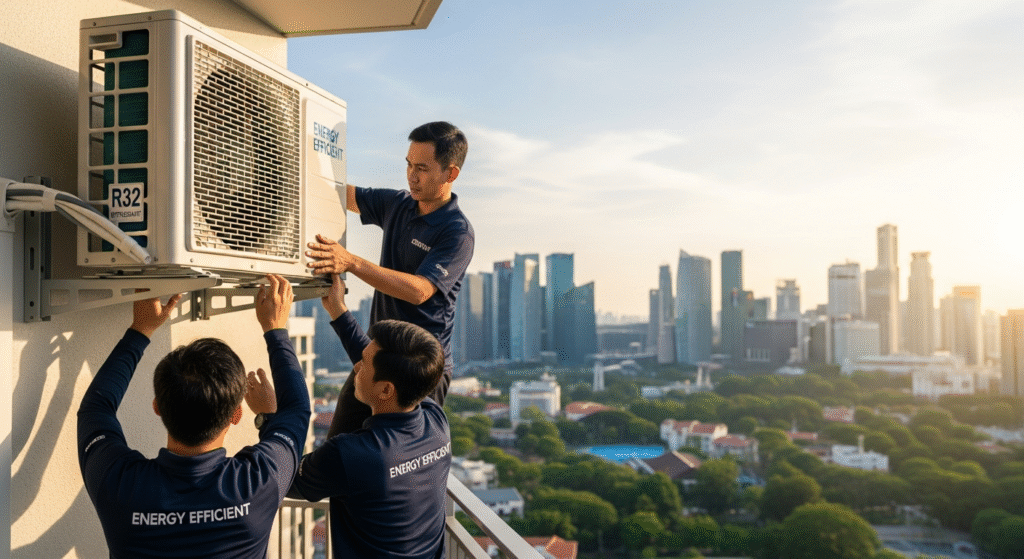
A competent installation team will do more than mount indoor and outdoor units. Key best practices include:
- Correct refrigerant charge and leak testing.
- Proper refrigerant pipe sizing and insulation to prevent heat pickup.
- Adequate condensate drainage to avoid water damage and bacterial growth.
- Solid mounting and vibration isolation for outdoor condensers to extend compressor life.
- Correct duct design and sealing for ducted systems to prevent leakage losses.
- Commissioning and performance verification — measure temperatures, airflow and power draw during handover.
A skilled contractor will also explain how to operate the system for best efficiency: sensible setpoint ranges, fan modes and the benefits of night schedules.
Ventilation and IAQ: don’t sacrifice fresh air for efficiency
High-efficiency cooling is not just about temperature. In tightly sealed buildings, adequate ventilation is essential to control CO2, humidity and contaminants.
- Consider energy recovery ventilators (ERVs) or heat recovery systems to bring in fresh air with minimal energy penalty.
- Use quality filters and schedule regular filter replacement to maintain airflow.
- For offices, integrate CO2 and occupancy sensors so ventilation responds to real-time demand.
Smart controls and building-level management
Smart thermostats, zone sensors and building management systems (BMS) let you operate HVAC Singapore assets more intelligently:
- Scheduling and setback: reduce cooling during unoccupied hours.
- Remote monitoring: receive alerts for faults, abnormal power draw or refrigerant leaks.
- Predictive maintenance: machine learning can flag components before they fail, reducing downtime and expensive emergency repairs.
For small businesses or multi-unit properties, ask potential contractors if they offer cloud-based maintenance or analytics as part of service packages.
Maintenance: the efficiency-preserving habit
Regular maintenance preserves efficiency and prevents costly mid-life replacement. A few practical recommendations:
- Regular coil and filter cleaning to maintain heat transfer and airflow efficiency.
- Annual professional servicing for refrigerant checks, fan and motor inspections, and electrical tests.
- Consider a planned preventive maintenance contract with SLAs for response times.
If you’re looking for deals or local technicians to keep performance high, check out cheap aircon cleaning deals and local listings for aircon cleaning and service near me.
For units that show persistent performance loss, a professional chemical overhaul can restore heat-exchange performance, but this should be considered alongside remaining equipment life and refrigerant compatibility.
Procurement and contractor selection tips
- Verify local experience, licensing and references specific to Singapore buildings and regulations.
- Ask for detailed quotations that separate equipment, labour and commissioning.
- Confirm warranties and the scope of warranty (parts vs labour, compressor coverage).
- Look for contractors who provide energy modelling or projected operating costs as part of the proposal.
If you want a reliable partner for installations and ongoing service plans, investigate recognised providers like the top AC company listings and seasonal aircon servicing promotion offers to reduce upfront costs.
Practical checklist for homeowners and small offices before installation
- Obtain a written load calculation and system sizing justification.
- Confirm equipment efficiency ratings and refrigerant type.
- Request a commissioning report and post-installation performance test.
- Establish a maintenance plan and ask about service response times.
- Check for compatibility with existing building ventilation and power supply.
Operational tips to maximise savings
- Set sensible temperature setpoints (around 24–26°C for occupied spaces) and use smart schedules.
- Use ceiling fans in tandem with aircon to increase perceived comfort at higher setpoints.
- Close curtains and blinds during peak sun hours.
- Seal gaps around doors and windows to reduce infiltration.
- Avoid running multiple high-heat appliances during peak cooling hours.
Final thoughts: value beyond the headline savings
Energy-efficient aircon installation in Singapore is an investment in comfort, cost control and resilience. In 2025, the right choices combine efficient hardware (inverter compressors, low-GWP refrigerants), quality installation, smart controls and disciplined maintenance. For homeowners and offices, this translates into reliable cooling, lower lifetime cost, and a smaller environmental footprint.
Partner selection matters: choose contractors who can demonstrate local experience and provide clear, verifiable installation and servicing commitments. Take advantage of bundled cleaning deals and renewable maintenance plans to keep systems running at peak efficiency and to protect your investment over time.
A well-designed and professionally installed system will repay itself through lower energy bills, fewer breakdowns and improved occupant satisfaction — a practical, long-term approach to cooling in Singapore’s climate.