Top Aircon Maintenance And Aircon Repair Singapore 2026
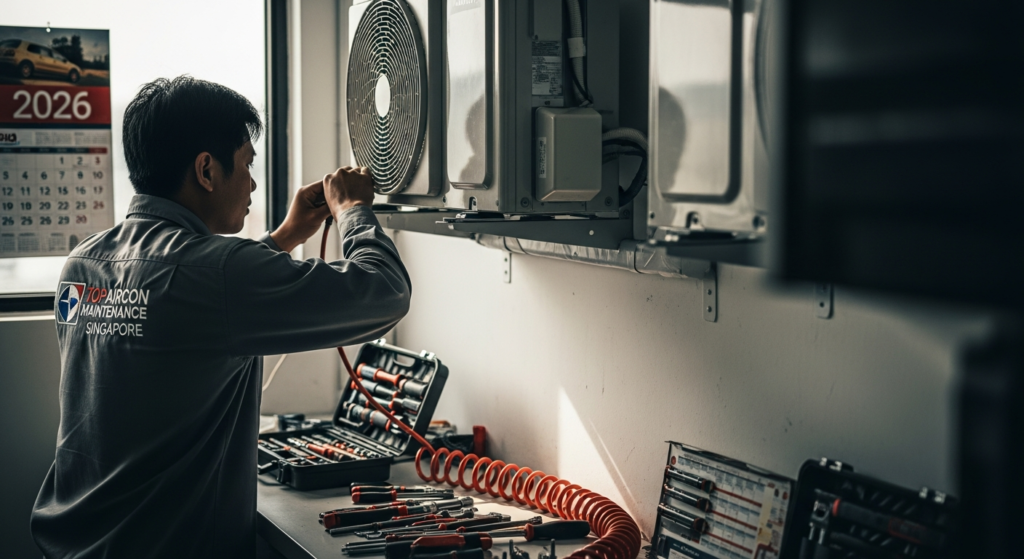
Keep Your Cool: Why Regular Aircon Maintenance Matters
In Singapore’s tropical climate, an air conditioner is not a luxury — it’s essential. Regular aircon maintenance reduces energy bills, extends equipment life, prevents unexpected breakdowns, and improves indoor air quality for homes and offices. For building managers and homeowners alike, a planned maintenance approach beats reactive repairs every time.
This guide covers practical maintenance schedules, common faults, repair expectations, cost considerations, and how to choose dependable aircon repair Singapore providers in 2026.
Common aircon problems and when to call for aircon repair Singapore
Understanding common faults helps you identify when a simple maintenance check will suffice or when to call a professional for aircon repair Singapore:
- Weak cooling or reduced airflow: Often caused by dirty filters, blocked coils, or refrigerant issues.
- Water leaks or overflowing drip trays: Usually due to clogged condensate drains or frozen coils.
- Strange noises or vibration: Loose mounting, worn fan motors, or failing compressors require inspection.
- High energy bills: Dirty coils, refrigerant undercharge, or failing components reduce efficiency.
- Bad smells and mould: Biological growth in the evaporator or drain lines demands thorough cleaning and mould removal.
If the unit shows persistent poor cooling, frequent tripping of circuit breakers, or refrigerant-scent leaks, arrange an experienced aircon repair Singapore technician immediately to avoid larger failures.
Routine aircon maintenance checklist for homeowners
A disciplined maintenance routine can prevent 70-80% of common failures. Here is a seasonal checklist tailored for Singapore homes:
- Monthly:
- Clean or replace washable filters. Clogged filters reduce airflow and strain compressors.
- Inspect remote controls, drainage flow, and audible changes.
- Every 3-6 months:
- Clean indoor evaporator coils and ensure condensate drain lines are clear.
- Wipe down external vents and check for debris around outdoor units.
- Annually:
- Full servicing by a licensed technician: refrigerant level check, compressor health, electrical safety inspection, and performance tuning.
- Professional mould inspection and removal if any odour or visible growth is present.
For a deeper how-to and seasonal tips, see these aircon cleaning and maintenance tips that are updated for 2026: https://newcool.sg/2026-singapore-aircon-cleaning-and-maintenance-tips/.
Office and commercial aircon maintenance best practices
Commercial systems face higher usage and more complex ducting. Preventive maintenance is crucial to maintain comfort and productivity:
- Establish a tailored maintenance schedule based on runtime hours, occupancy patterns, and system size.
- Use service contracts with clear KPIs: response time, uptime guarantee, filter replacement cadence, and performance benchmarks.
- Keep spare parts inventory for critical components (fans, contactors, compressors) to minimize downtime.
- Regularly review energy consumption and implement controls like VAV (variable air volume) and smart thermostats for energy optimisation.
If you manage commercial systems, consider service providers with dedicated commercial experience. Find commercial aircon service and repair expertise here: https://newcool.sg/commercial-aircon-service-and-repair-expertise-singapore/.
DIY maintenance vs professional servicing
What homeowners can do safely:
- Clean washable filters and external panels.
- Clear visible debris from outdoor units and ensure good airflow.
- Monitor performance and energy use.
What requires a licensed technician:
- Refrigerant handling and leak repair (legal and safety requirements apply).
- Electrical diagnostics and compressor or PCB replacement.
- Deep coil cleaning, chemical treatments, and major component swaps.
Avoid attempting refrigerant top-ups or electrical repairs yourself. Using professionals keeps warranty valid and ensures compliance with safety rules.
How to choose a reliable aircon repair Singapore provider
Selecting the right contractor affects both cost and system longevity. Use this checklist when evaluating providers:
- Licensing and certifications: Confirm technicians are trained for refrigerant handling and safety.
- Transparent pricing: Clear breakdowns for call-out, diagnostics, parts, and labour.
- Warranty on repairs and parts: Minimum 3-6 months is common; longer for major components.
- Proven experience with your system type: inverter, VRF, ducted or split units.
- Reviews and references from similar residential or commercial projects.
Look for bundled offers when installing or replacing units. Bundles might include cleaning promos that save money up front — for current special offers, check aircon installation specials with cleaning promo 2026: https://newcool.sg/aircon-installation-specials-with-cleaning-promo-2026/.
Mould, odours and indoor air quality
High humidity and constant cooling create ideal conditions for mould. Mould affects health and efficiency. Actions to reduce risk:
- Regularly clean coils and drain pans.
- Use anti-microbial treatments during annual servicing.
- Improve ventilation and consider dehumidification options for high-humidity spaces.
For specialist mould removal services, consult a verified provider: https://newcool.sg/top-aircon-cleaning-mould-removal-ac-company-singapore/.
Typical costs and budgeting for maintenance and repairs in Singapore (2026)
Costs vary by system type and extent of work. Approximate ranges for 2026:
- Basic servicing (filter clean, visual inspection): SGD 60–120 per unit for residential split systems.
- Full servicing (deep coil clean, drain line flush, refrigerant check): SGD 120–250 per unit.
- Minor repairs (capacitors, sensors, fan motors): SGD 150–400 including parts.
- Major repairs (compressor replacement, refrigerant top-up, PCB replacement): SGD 400–2,500 depending on unit and part.
For offices with multiple units or central systems, negotiate service contracts with fixed annual fees to stabilise OPEX and guarantee response times.
New trends and technologies affecting maintenance in 2026
- R32 and low-GWP refrigerants: Newer systems commonly use R32, which has lower global warming potential and different handling needs. Ensure technicians are trained for the specific refrigerant in your units.
- Inverter technology: More efficient but requires proper maintenance of electronics and sensors.
- Smart controls and IoT monitoring: Remote monitoring can detect inefficiencies early and prompt proactive service calls.
- UV-C and antimicrobial coatings: These can reduce biological growth, but require correct implementation to be effective.
Embracing these trends improves efficiency and reduces long-term maintenance costs.
What to expect during an aircon repair visit
A professional repair visit typically follows these steps:
- Onsite inspection and symptom verification.
- Diagnostic testing: airflow, temperatures, electrical loads, and refrigerant pressures.
- Quotation for repairs including parts and labour, with timelines.
- Agreed repair work executed with safety procedures and testing.
- Post-repair performance test and handover notes, including preventive tips.
Always request a detailed job report and a parts warranty for replacements.
Minimising downtime and managing emergencies
- Keep a list of trusted emergency technicians with guaranteed response SLAs.
- For offices, prepare temporary cooling plans (portable units, staggered schedules) to protect equipment and staff comfort during repairs.
- Implement predictive maintenance using runtime monitoring to catch issues early and avoid emergency repairs.
For a practical servicing roadmap and a 2026 maintenance guide, review this servicing guide: https://newcool.sg/aircon-servicing-singapore-2026-maintenance-guide/.
Quick action checklist for homeowners and office managers
- Schedule basic servicing every 3–6 months and a full professional service annually.
- Replace or clean filters monthly if the unit runs daily.
- Inspect outdoor units for debris and ensure unobstructed airflow.
- Keep service records and receipts to support warranties.
- Hire licensed technicians for refrigerant and electrical work.
For commercial facilities, convert these tasks into a maintenance contract with defined KPIs and regular reporting.
Final note
Regular aircon maintenance coupled with timely professional repairs keeps systems efficient, reduces energy cost, and avoids disruptive failures. Whether you manage a five-room condominium or a multi-storey office block, a proactive maintenance plan and vetted aircon repair Singapore partners are the best investments to protect comfort, health, and equipment value in 2026.
For specialised commercial needs and proven service experience, explore commercial solutions and expert teams at: https://newcool.sg/commercial-aircon-service-and-repair-expertise-singapore/.