Aircon Chemical Overhaul Costs And Repair Singapore 2026
Understanding an aircon chemical overhaul: what it is and why it matters
In Singapore’s humid climate, regular servicing goes beyond a simple filter clean. An aircon chemical overhaul is an intensive deep-clean that removes accumulated grime, mould, grease and mineral deposits from the evaporator coil, blower fan, condensate trays and other indoor components. For homeowners and offices, this service restores cooling efficiency, improves indoor air quality, and reduces the likelihood of breakdowns — all critical in a tropical city where air conditioners run for long hours.
Many people confuse routine servicing with a chemical overhaul. Routine servicing (monthly or quarterly checks) covers filters, basic coil dusting and inspections. An aircon chemical overhaul uses specialised detergents, foams and targeted flushing to reach areas that regular maintenance can’t, which is why it costs more but delivers bigger long-term savings.
Typical scope: what technicians do during an overhaul
A professional chemical overhaul usually includes:
- Detailed inspection and diagnosis of aircon performance
- Removal and chemical cleaning of evaporator coils and indoor casings
- Blower wheel and fan cleaning
- Condenser coil and outdoor unit degreasing (if included)
- Drain pipe and condensate tray disinfection to remove slime and algae
- Chemical flushing of drain traps and pan to prevent blockages
- Reassembly, testing and temperature recovery check
For commercial systems, additional steps can include UV sterilisation, PCB inspection, leak detection and refrigerant recovery.
How often should you schedule an overhaul?
Frequency depends on usage and environment:
- Homes with light use or good filter habits: every 24 months
- Homes with heavy daily use or pets/smokers: every 12–18 months
- Offices and commercial spaces with prolonged operation: annually, or every 6–12 months for high-occupancy spaces
If you want guidance on timing and signs to watch for, see this practical note on when to schedule aircon chemical overhaul.
2026 cost guide: realistic price ranges in Singapore
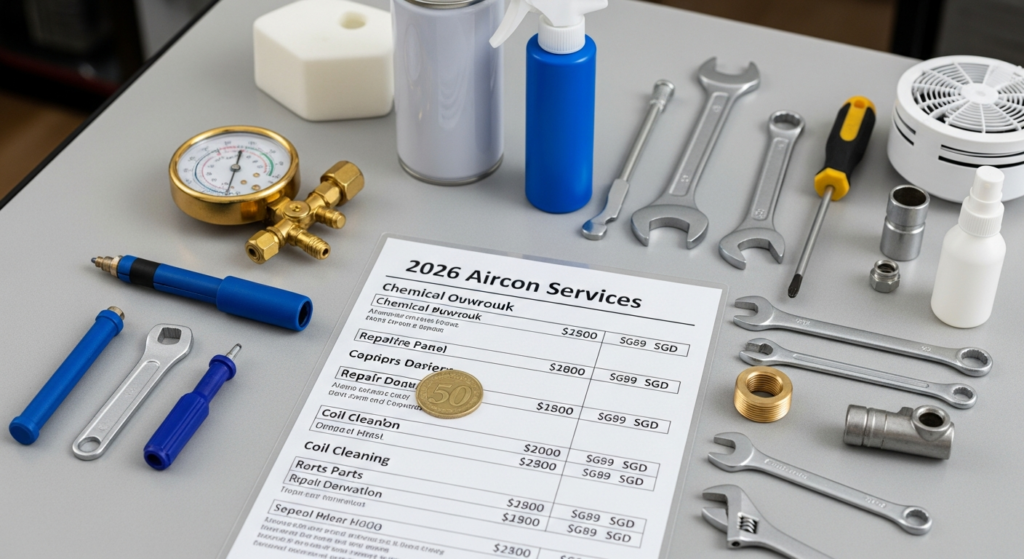
Costs vary by unit type, brand, complexity and whether additional repairs or parts are required. The figures below reflect market trends in 2026 and typical vendor pricing ranges — use them as a planning reference.
- Split wall-mounted (standard residential): SGD 150 – 350 per indoor unit for a full chemical overhaul.
- Cassette / floor-ceiling / multi-split indoor units: SGD 250 – 600 per unit (labour and access complexity increase cost).
- Ducted / central systems: SGD 500 – 2,000+ depending on zone access and length of ducting.
- Refrigerant top-up (R32, R410A conversions possible): SGD 80 – 400 depending on type and quantity.
- Leak detection and repair: SGD 120 – 700+ depending on part replacement and labour.
- Compressor replacement (major repair): SGD 700 – 2,500+ including labour and refrigerant recharge.
For offices wanting multiple units serviced, bundling often reduces per-unit cost; compare quotes and request a detailed scope to avoid surprise add-ons. For competitive options you can browse trusted commercial providers in Singapore at this commercial aircon service resource.
Factors that influence the final price
- Unit accessibility: ceiling cassettes and ducted systems need scaffolding or ceiling access.
- Number of indoor units and a single outdoor condensing unit shared by several indoors.
- Age and make of the unit: older models often need more attention or obsolete parts.
- Extent of fouling: heavy mould or grease buildup takes more chemical contact time.
- Parts requirement: motors, PCBs, sensors or piping will add cost.
- Refrigerant type: supply and environmental policies affect refrigerant pricing (R32 adoption is shifting costs).
Repair vs overhaul: when repair is the right choice
An overhaul is preventive and restorative; repairs are corrective. Common repair scenarios in Singapore include:
- Compressor failure or low pressure requiring component replacement
- Refrigerant leaks and repeated loss of cooling
- Blower motor failure or noisy operation
- Water leaks due to blocked drain pipe or pan damage
Simple repairs (fan motor, sensor, thermostat) may cost SGD 80–400. Major repairs like compressors or PCB changes are more costly and sometimes warrant evaluating replacement versus ongoing repair cost.
For those weighing options between one-off fixes, scheduled cleaning, or replacement, an overview of aircon service and cleaning best practices in 2026 is a useful reference.
Energy, refrigerant and regulatory trends affecting costs in 2026
- Refrigerant shifts: The market continues moving towards lower-GWP refrigerants like R32. Availability and handling requirements affect repair and top-up costs.
- Efficiency expectations: Inverter compressors and higher SEER ratings are standard for new units; older non-inverter models are less efficient and more likely to need frequent servicing.
- Smart management: IoT controls and remote monitoring are increasingly used in commercial sites to detect anomalies early and reduce emergency repair costs.
- Environmental compliance: Technicians must follow proper refrigerant handling and disposal procedures — this compliance is non-negotiable and may add to service cost but protects long-term value.
Signs you need an immediate repair or overhaul
Watch for these red flags:
- Noticeably weaker cooling or uneven temperatures
- Significant increase in electricity bills without usage change
- Foul or musty odours when the unit runs
- Water leakage or overflow from the indoor unit
- Strange noises, vibration or frequent trips of the circuit breaker
If you see persistent issues, avoid repeatedly running a struggling system; prompt diagnosis prevents escalation and often reduces total spend.
Choosing the right aircon repair Singapore provider: checklist
- Credentials and experience: proven track record with similar systems and certifications where applicable.
- Transparent quotes: a detailed invoice with parts, labour and testing fees.
- Before-and-after documentation: photos or test logs showing improvement.
- Warranty on work and parts: at least 30–90 days for labour, longer for parts.
- Insurance and safety practices: mandatory for on-site work in commercial buildings.
- Value-added services: energy advice, refrigerant reports or follow-up inspections.
For cost-sensitive clients, exploring promotional packages or off-peak discounts can help; see current offers and budget-friendly options at cheap aircon servicing.
Tips to reduce overall lifecycle costs
- Schedule regular servicing to catch small problems early — preventative maintenance is cheaper than major repairs.
- Replace filters and keep coils clear; small steps improve efficiency markedly.
- Consider upgrading old non-inverter units to modern inverter models for better long-term savings.
- Bundle multiple units in the same building for a reduced per-unit overhaul rate.
- Ask about genuine spare parts and keep a service record for warranty and resale value.
Typical timeline for an overhaul or repair visit
- Diagnosis and quotation: same day or next business day depending on availability.
- Chemical overhaul (single split unit): 2–4 hours on site; cassette or ducted systems may take 4–8 hours.
- Repair (minor): 1–3 hours; major repairs with parts replacement: 1–3 days depending on part lead time.
Common misconceptions
- “A quick spray is the same as an overhaul”: False. Overhauls use a sequence of cleaning, disinfection, and mechanical checks not achieved by a surface spray.
- “Overhauls damage coils”: When done by trained technicians, chemical cleaning restores coil performance and prolongs life. Always check for technician credentials and chemical safety practices.
- “All providers charge the same”: Pricing varies widely; compare detailed scopes and customer reviews rather than just the headline number.
Where to start: planning your next service
Begin with a straightforward diagnostic visit if you’re unsure whether your unit needs an overhaul or a repair. A proper inspection will identify the root cause — scaling, mould, refrigerant loss, or mechanical wear — and then you can compare itemised quotes.
For workplaces that need structured maintenance contracts, consider vendors who offer scheduled visits, energy-monitoring add-ons and clear escalation paths for breakdowns. Residential owners who want a quick reference on scheduling frequency and signs can check practical notes on when to schedule aircon chemical overhaul.
Final note
An informed decision on chemical overhauls and repairs balances upfront cost with long-term energy savings, indoor air quality and system reliability. In Singapore’s climate, proactive maintenance and choosing experienced technicians are the best strategies to protect comfort and control ongoing costs.