Aircon Cleaning And Air Conditioning Service Singapore 2026
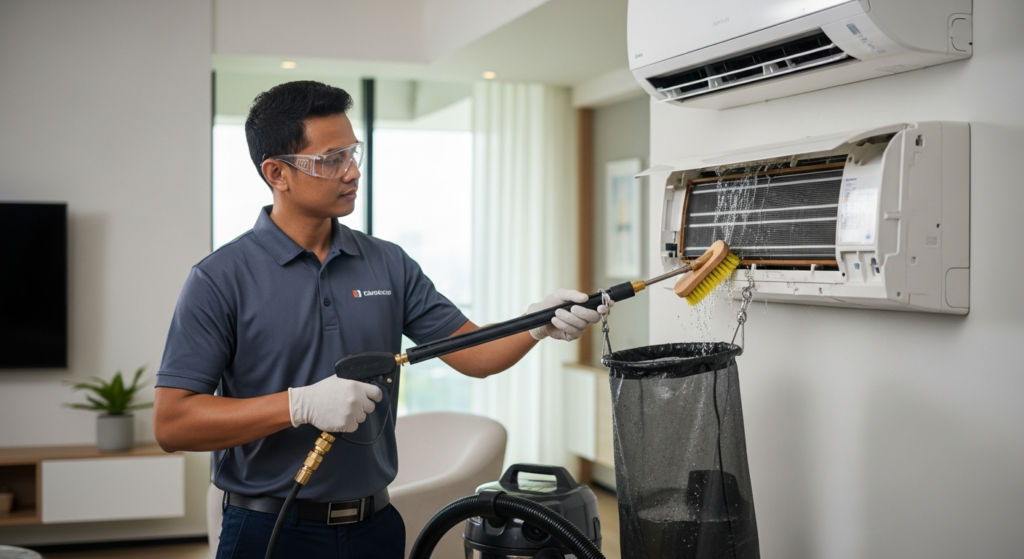
Why regular aircon cleaning and air conditioning service matters in Singapore
Singapore’s tropical climate keeps air conditioners running year-round. For homeowners and offices, consistent aircon cleaning and professional air conditioning service aren’t luxuries — they are essential to maintain comfort, cut energy costs, and protect health. Dust, mould and grease build up in filters, coils and drain systems, reducing efficiency and worsening indoor air quality (IAQ). Regular maintenance restores performance, lowers running costs, and extends equipment life.
The difference between aircon cleaning and a full air conditioning service
Aircon cleaning typically focuses on visible, high-impact areas: cleaning filters, wiping panels, and removing superficial dust from evaporator coils. It can be done more frequently (every 1–3 months for filters) and is great for quick IAQ improvements.
A full air conditioning service is more thorough. It includes: refrigerant checks, compressor and electrical inspection, coil deep-cleaning, drain-line clearing, fan and motor checks, airflow measurement, and performance testing. Full servicing uncovers small faults before they become major repairs.
For complex repairs or diagnostic work, rely on proven professionals with experience in repair and system diagnostics—look for recognised technicians with service guarantees and clear reporting, such as those offering documented aircon repair expertise from trusted AC company Singapore.
Recommended maintenance frequency for homes and offices
- Filters: clean every 1–3 months for homes; monthly for high-traffic offices.
- Basic aircon cleaning (panels, filters, remote checks): every 3–6 months.
- Full air conditioning service (including refrigerant and electrical checks): at least once a year for homes; every 6 months for offices and systems under heavy load.
- Deep coil cleaning and chemical wash: every 1–2 years, or sooner if IAQ issues arise.
These intervals balance cost and performance. In rented units, commercial kitchens, or dusty environments, increase the frequency.
What a professional service should include: an easy checklist
When booking a technician, expect a clear checklist that covers safety, performance and IAQ. A solid guide is the HVAC Singapore residential aircon service checklist, which outlines key items such as:
- Visual inspection of indoor and outdoor units
- Filter cleaning and replacement recommendations
- Evaporator and condenser coil cleaning
- Checking refrigerant pressure and leak tests
- Fan, motor and belt checks
- Electrical component inspection and safe operation tests
- Drain pan and condensate drain clearing
- Airflow and temperature-drop measurement
- Service report and recommendations (including photos)
A written service report helps you track unit health over time and compare quotes responsibly.
DIY vs professional cleaning: what you can and shouldn’t do
DIY tasks you can safely handle:
– Vacuum and wash removable filters.
– Wipe accessible panels and casings.
– Clear visible debris from outdoor units (leaves, paper).
Leave the following to professionals:
– Opening sealed casings or handling refrigerant.
– Electrical inspections, capacitor replacement, or compressor work.
– Chemical coil wash on units under warranty unless specified.
If a unit is under warranty, check the terms: many warranties require certified servicing for coverage to remain valid.
How proper servicing reduces costs and improves efficiency
A poorly maintained aircon can use 10–30% more electricity. Regular air conditioning service reduces energy waste by restoring designed efficiency — cleaner coils and filters mean better heat exchange and less runtime. Small upgrades such as ensuring correct refrigerant charge and calibrating thermostats also yield tangible savings. For promotional deals and ways to save on routine work, consider seasonal offers like the save on cheap aircon cleaning Singapore servicing promotion.
2026 trends affecting aircon cleaning and servicing in Singapore
-
Energy efficiency and inverter technology: Inverter compressors dominate newer models because they modulate speed to meet load, improving efficiency and comfort. Technicians now need skills for inverter diagnostics and component-level work—see specialist advice on aircon repair expertise HVAC inverter tips 2026.
-
Greener refrigerants: The industry is shifting to low-global-warming-potential refrigerants such as R32 and newer blends. Proper handling and leak management are part of modern service protocols.
-
Smart controls and IoT: Wi‑Fi thermostats, occupancy sensors and app-based maintenance alerts help optimise schedules and detect issues sooner. Integrating these into a service plan reduces unnecessary runtime.
-
Focus on IAQ: Post-pandemic awareness keeps indoor air quality a priority. UV-C coil treatments, high-efficiency particulate filters, and routine microbial cleaning are more commonly requested.
-
Predictive maintenance: Remote monitoring and predictive analytics enable technicians to find problems before failures, reducing downtime for offices and large residential systems.
These trends mean technicians need ongoing training and shops should offer transparent reporting on green practices and refrigerant handling.
Pricing expectations and value-for-money tips
Service pricing varies by unit type (wall-mounted, cassette, floor-ceiling, or VRF systems), accessibility, and required scope. Typical indicators:
– Basic cleaning and filter service: lower-cost, often promotional.
– Full servicing with coil wash and refrigerant checks: mid-range.
– Repairs, parts and compressor replacement: higher, depends on parts and labour.
Value tips:
– Compare written quotes that list tasks and parts explicitly.
– Ask about warranty on workmanship and replaced parts.
– Bundle services (e.g., multiple units or office portfolios) for volume discounts.
– Watch for seasonal promotions and vetted offers such as those found via best aircon servicing near me Singapore 2026.
Choosing a reliable service provider in Singapore
Look for: licensing (where applicable), clear itemised quotes, insurance, positive reviews, and technicians who provide photo or video proof of work. A good provider will explain the problem in plain language and recommend cost-effective fixes. For specialised repair work, rely on companies that publish their expertise and case studies.
When speaking to potential providers, ask:
– Are your technicians certified for refrigerant handling?
– Do you test refrigerant pressures and electrical safety?
– Will you provide a written service report and photos?
– What warranty do you offer on parts and labour?
Providers that transparently document their processes and follow an industry checklist are usually safer choices. For repair-focused expertise, see recommendations on aircon repair expertise from trusted AC company Singapore.
Practical tips to extend unit life between services
- Run a self-check monthly: listen for unusual noises, watch for dripping or reduced cooling.
- Keep vents and returns clear of furniture and obstructions.
- Use a programmable schedule or smart thermostat to reduce unnecessary runtime.
- Run fan-only cycles shorty after returning from outdoors to reduce moisture buildup.
- For offices, set standard temperature setpoints (e.g., 24–25°C) and educate staff on consistent usage to avoid excessive on/off cycling.
Indoor air quality: why cleaning matters for health
Aircon cleaning reduces allergens, mould spores and odours. Poorly maintained systems can circulate contaminants throughout a home or office. In spaces with vulnerable occupants — children, elderly or immunocompromised individuals — prioritise thorough cleaning and consider higher-efficiency filters (MERV-rated or HEPA-compatible solutions for recirculation systems).
Service documentation and record-keeping
Maintain a folder (digital or physical) with service reports, invoices and warranty documents. This record helps technicians see a unit’s history, verifies regular maintenance for future buyers or landlords, and supports warranty claims.
If you manage multiple units (e.g., an office block or strata-managed residential complex), automated tracking of service dates and condition reports reduces risk and simplifies budgeting.
Final checklist before you book
- Determine your needs: basic cleaning, full servicing, or repair.
- Check warranty terms.
- Request itemised quotes and expected downtime.
- Confirm technician credentials and refrigerant handling certification.
- Ask for a written service report and warranty on workmanship.
For Singapore homes and offices aiming for reliable comfort, better indoor air quality, and smarter energy use in 2026, regular aircon cleaning combined with annual or biannual air conditioning service is the most cost-effective strategy. Use checklists, choose trained technicians, and keep records to protect your investment and maintain a healthier indoor environment.