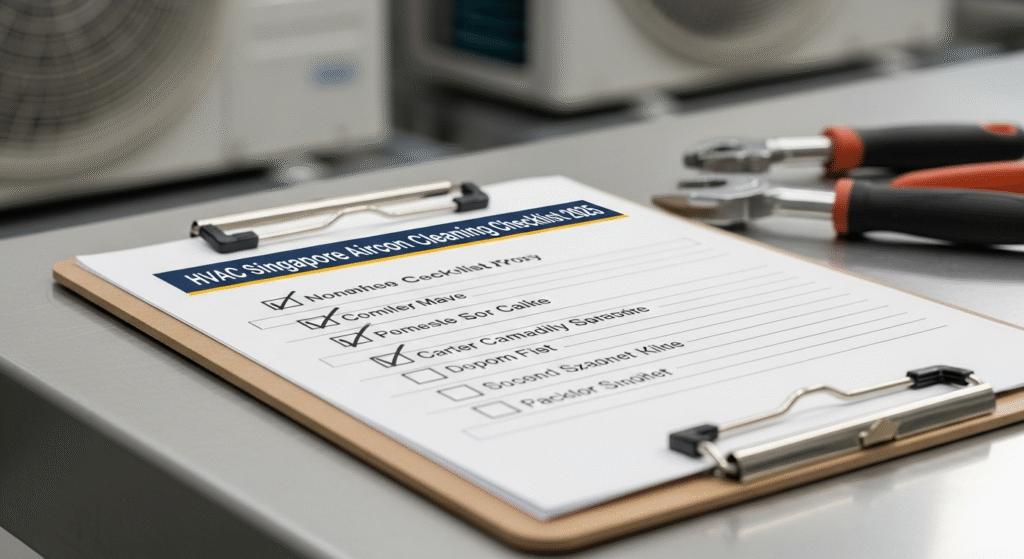
HVAC Singapore Aircon Cleaning Checklist 2025
Why this 2025 checklist matters for Singapore homes and offices
Singapore’s tropical climate puts continuous demand on HVAC systems and room air conditioners. Regular aircon cleaning keeps indoor air healthy, cuts energy bills, and prevents unexpected breakdowns. This checklist is tailored to local conditions and covers practical steps homeowners, facilities managers and office administrators can use to maintain reliable cooling throughout the year.
Key benefits of routine aircon cleaning in Singapore
- Better indoor air quality: removes dust, pollen, mould spores and other allergens common in humid climates.
- Improved energy efficiency: clean coils and filters reduce compressor load and stabilise power consumption.
- Longer equipment life: preventive cleaning means fewer costly replacement and repair events.
- Reduced odours and microbial growth: humidity encourages mould; cleaning combats this at the source.
- Compliance and safety: commercial buildings must meet workplace health guidelines and insurers may require documented maintenance.
Pre-cleaning safety and preparation checklist
- Turn off the unit and isolate power at the breaker before any work. Electricity and water are a risky mix.
- Inform building occupants of planned maintenance to avoid complaints and accidental operation.
- Gather tools and materials: soft brushes, microfiber cloths, a vacuum with brush attachment, coil cleaner, fin comb, mild detergent, bucket, gloves and safety goggles.
- For central HVAC systems, coordinate with building management for access to plant rooms, condensate drains and ductwork.
Homeowner aircon cleaning checklist (split-systems)
- External checks
- Inspect the outdoor unit for debris, leaves or bird nests. Keep at least 30 cm clearance for airflow.
- Ensure condensate drain lines are clear and directing water away from foundations and walkways.
- Indoor unit filter cleaning
- Remove and vacuum filters monthly; wash with warm soapy water as needed. Let fully dry before replacing.
- Replace disposable filters per manufacturer guidance.
- Evaporator coil and blower cleaning
- Light cleaning: vacuum to remove surface dust. For visible grime, apply a no-rinse coil cleaner.
- Check blower fan for dirt buildup that reduces airflow.
- Drain pan and condensate line
- Clean the pan and pour a small amount of white vinegar through the drain to reduce algae build-up.
- Remote control and thermostat
- Replace batteries annually and verify thermostat calibration to avoid over-cycling.
Office and commercial HVAC checklist (multi-split and central systems)
- Scheduled inspections
- Quarterly inspections of filters, belts, drives and controls.
- Annual professional inspection for refrigerant charge, compressor health and electrical integrity.
- Filter program
- Use MERV-rated filters appropriate for your space. Common office spaces benefit from MERV 8 to 11; medical or sensitive environments may need higher.
- Establish a filter replacement log and assign responsibility.
- Ductwork and airflow balancing
- Inspect ducts for leaks, dust accumulation and microbial growth. Clean ducts as part of a 2–5 year program depending on dust load.
- Conduct airflow balancing after major cleaning to ensure even distribution.
- Condensate and drain maintenance
- Inspect all condensate traps and lines monthly; consider biocide dosing for high-humidity areas.
- Controls, sensors and BAS integration
- Ensure building automation systems are receiving correct sensor data and that setpoints reflect occupancy schedules for energy savings.
The 12-point aircon cleaning checklist (quick reference)
- Power isolation and safety setup
- External unit clearance and debris removal
- Filter vacuum and washing
- Evaporator coil inspection and cleaning
- Condenser coil cleaning outdoors
- Fan and blower cleaning
- Drain pan and condensate line flushing
- Refrigerant leak visual check
- Electrical connections and controls tightening
- Thermostat calibration
- Ductwork visual inspection (if applicable)
- Operational test run and performance logging
DIY vs professional services: what to tackle and when to call a pro
- DIY suitable for: filter cleaning, vacuuming indoor unit, clearing basic debris from outdoor units, and simple condensate drain maintenance.
- Call a professional for: refrigerant handling, deep coil cleaning, compressor or electrical issues, duct cleaning, chemical overhaul and end-of-warranty servicing.
For a complete servicing roadmap and repair tips, consult a detailed professional guide like this complete aircon servicing guide (https://newcool.sg/complete-aircon-servicing-singapore-and-repair-guide-2025/).
When a chemical overhaul is appropriate
Chemical overhaul is needed when simple cleaning can’t restore coil efficiency or significant microbial growth is present. This process uses specialised detergents and pressure washing to remove deep grime on coils and fins. It requires trained technicians and proper wastewater management to comply with local regulations. Search for certified chemical overhaul specialists listed under aircon service near me (chemical overhaul) (https://newcool.sg/aircon-service-near-me-chemical-overhaul-sg-2025/).
What to expect from a professional HVAC Singapore service visit
- Safety checks and system isolation
- Filter replacement and filter audit
- Coil cleaning with foam or chemical cleaners if needed
- Inspection and cleaning of condensate drains and pans
- Electrical inspection and tightening of terminals
- Refrigerant leak test and pressure checks
- System performance test and documentation
If you want verified contractor options and vetted pros, review a list of the best aircon servicing providers (https://newcool.sg/best-aircon-servicing-singapore-2025-verified-pros/).
Choosing a service provider in Singapore: questions to ask
- Are technicians licensed and insured?
- Do they provide written checklists and service reports?
- What chemicals and waste disposal methods do they use?
- Can they provide references from similar homes or office complexes?
- Do they offer maintenance contracts and emergency response SLA?
Consider comparing options like reliable aircon service providers near me (https://newcool.sg/reliable-aircon-service-singapore-near-me-2025/) for documented reliability and local presence.
Pricing expectations and budgeting tips for 2025
- Basic home aircon servicing can range from low-cost maintenance to chemical overhauls that are several times higher. Commercial central system servicing will be more expensive due to scale and access complexity.
- Budget for quarterly filter maintenance plus an annual professional inspection and deep clean.
- Investing in preventive servicing reduces the long-term total cost of ownership and avoids emergency repairs during peak heat.
If budget constraints are significant, compare cost-effective options that still follow best practices such as cheap aircon servicing chemical cleaning alternatives (https://newcool.sg/cheap-aircon-servicing-singapore-chemical-cleaning-2025/).
Regulatory, health and environmental considerations
- Cultural context: Singapore authorities emphasize hygiene and workplace safety. Proper records help with inspections and occupant reassurance.
- Environmental best practice: choose technicians who capture and dispose of chemical runoff responsibly and who follow energy-efficient tuning of controls.
- Health: mould and bacterial growth are real concerns in humid environments; effective cleaning reduces sick days and improves productivity.
Seasonal maintenance calendar for Singapore
- Monthly: check filters, remote batteries, and clear outdoor obstructions.
- Quarterly: vacuum indoor units, inspect condensate lines, replace filters as needed.
- Twice a year: professional inspection and coil cleaning in early wet and dry seasons to prevent mould cycles.
- Annually: full service including refrigerant check, electrical inspection and performance optimisation.
Quick troubleshooting tips for homeowners
- Reduced cooling: check and clean filters first; blocked filters are the most common cause.
- Strange noises: inspect fan blades and indoor unit for loose components. Turn off unit and call technician if noise persists.
- Water leaks: clear condensate drain and check for sagging drain hoses.
- Bad odours: clean filters and treat drain pan; persistent odours may need deep coil cleaning.
Documenting maintenance: a simple log template
- Date
- Unit/location
- Tasks performed
- Technician name/company
- Observations and parts replaced
- Next recommended service date
Keeping consistent logs simplifies warranty claims and improves lifecycle planning for HVAC Singapore assets.
Final checklist summary
- Keep filters clean and set a routine schedule.
- Inspect outdoor units for airflow clearance.
- Schedule professional inspections annually and chemical overhauls when deep cleaning is required.
- Use verified service partners with transparent reporting and responsible waste practices.
- Track maintenance history to protect warranties and maintain workplace health.
This HVAC Singapore aircon cleaning checklist for 2025 gives homeowners and offices a clear roadmap to efficient, healthy, and cost-effective cooling. Follow the steps above, combine routine DIY with scheduled professional servicing, and maintain simple records to keep systems running at peak performance all year round.