Top Residential Aircon Service With Chemical Cleaning 2026
Why regular residential aircon service matters in Singapore
Singapore’s equatorial climate means air conditioning is not a luxury — it’s essential. High humidity and constant use accelerate dust, mould and grime buildup inside split units, ceiling cassettes and ducted systems. Regular residential aircon service keeps systems running efficiently, extends equipment life and preserves indoor air quality for homes and offices alike. For many homeowners and facility managers, chemical cleaning has become a recommended step when routine servicing alone cannot restore performance.
What is aircon chemical cleaning and how is it different?
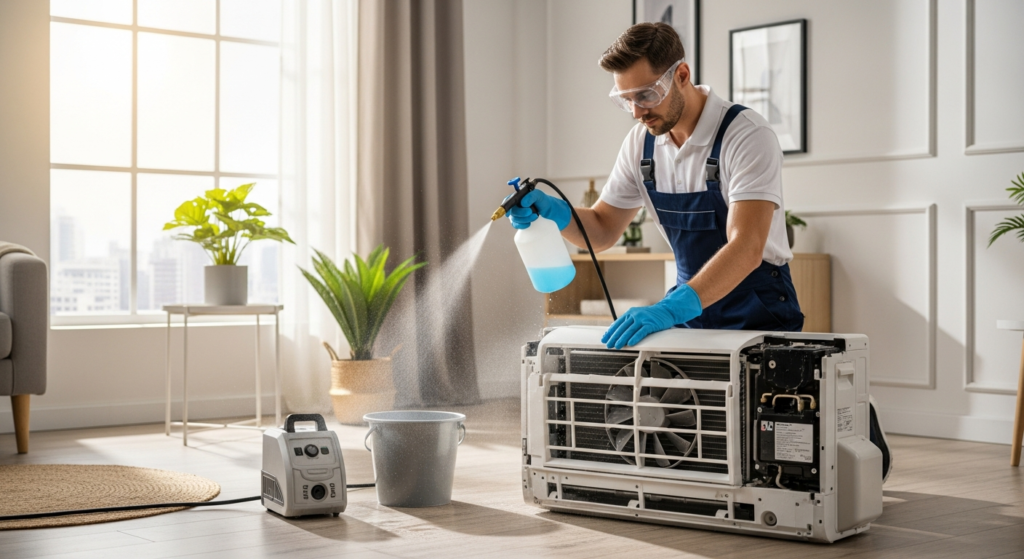
Aircon chemical cleaning (often called deep cleaning or chemical wash) uses specialized detergents and coil cleaners to dissolve hardened grease, biofilm and mould from coils, drain pans and internal plastic components. Unlike surface wipe-downs or compressed-air dusting, chemical cleaning penetrates stubborn deposits that restrict airflow and reduce heat transfer.
For an overview of when chemical cleaning is recommended versus a full overhaul, see this guide on aircon chemical overhaul vs cleaning.
Key benefits of chemical cleaning for residential and office systems
- Improved cooling performance: Removing grime restores heat exchange efficiency so your unit cools faster and evenly.
- Lower energy use: A cleaner coil and unobstructed airflow reduce compressor runtime, cutting electricity bills.
- Better indoor air quality: Chemical cleaning removes mould and bacterial biofilm that trigger allergies and unpleasant smells.
- Fewer breakdowns: Preventative deep cleaning lowers the risk of component failure caused by dirt buildup.
- Longer equipment life: Reduced mechanical strain helps protect both residential units and centralised office systems.
When should you choose aircon chemical cleaning?
- Persistent foul odours after standard servicing
- Visible black mould on internal parts or drain pan
- Units that show little improvement after filter cleaning
- Older systems with years of accumulated grime
- Post-renovation cleaning where dust has entered units
Typical guidance in Singapore is to schedule basic residential aircon service every 6–12 months and consider chemical cleaning every 12–36 months depending on usage, indoor humidity and occupant sensitivity.
For practical aircon maintenance tips, including frequency and seasonal reminders, refer to local recommendations.
What a professional chemical cleaning service includes (step-by-step)
- Inspection and diagnosis: Technician checks filters, coils, drain, fan and electricals.
- Pre-cleaning protection: Protective sheets prevent water and chemicals from dripping onto furniture and walls.
- Disassembly: Front panel, filters and sometimes the casing are removed for internal access.
- Application of chemical agents: Certified coil cleaners or foaming agents are applied to dissolve grime.
- High-pressure rinse and flushing: Residue is flushed into a collection tray and disposed of responsibly.
- Fan, motor and drainage check: Mechanical parts are cleaned, lubricated and aligned as needed.
- Drying and deodorising: Units are dried and treated to neutralize smells.
- Reassembly and test run: System is reassembled and performance verified for temperature, airflow and noise.
A standard split unit chemical clean usually takes 2–3 hours; multi-split, cassette and ducted systems require longer.
Safety and environmental considerations
- Choose technicians who use biodegradable, low-corrosive cleaning agents to reduce environmental impact.
- Proper disposal: Wastewater containing cleaning agents must be collected and disposed of according to local practice; reputable companies do this for you.
- Electrical safety: Only trained technicians should open and clean electrical components to avoid hazards.
- Warranty impact: Confirm whether deep cleaning affects your unit warranty; many approved providers adhere to manufacturer guidelines.
If your property has both residential and commercial needs, look for providers experienced in commercial and residential aircon service who can tailor methods to different system types.
Estimated costs and what affects price in Singapore (2026)
Costs vary by unit type, condition and service scope. Typical ranges (SGD):
- Single split unit (chemical clean): 120–250 SGD per unit
- Multi-split or cassette units: 200–450 SGD per unit
- Ducted or central AHU systems: quoted per system after inspection
Factors that raise cost: heavy mould remediation, major disassembly, replacement parts, and specialised disposal. Many companies offer package discounts for multiple units or annual maintenance contracts.
For a detailed checklist to evaluate a provider and anticipate costs, review an aircon cleaning checklist.
Choosing the right residential aircon service provider
When hiring a chemical cleaning specialist in Singapore, check for:
– Experience with your unit type (inverter splits, cassettes, ducted systems)
– Transparent quotes with itemised costs and optional add-ons
– Certifications and safety compliance
– Service warranty and parts guarantee
– Positive local reviews and references
– Insurance coverage for accidental damage
If you’re upgrading or installing newer systems, consider providers who also offer residential aircon service and inverter installation, since inverter systems need specific handling and can offer long-term energy savings.
Practical tips for homeowners and office managers
- Keep filters clean: Monthly filter cleaning reduces the need for frequent chemical cleans.
- Use moderate thermostat settings: Lowering the load reduces strain and dust circulation.
- Run dehumidifiers or maintain good ventilation: Lower indoor humidity discourages mould.
- Schedule service before peak heat periods to ensure peak performance and early problem detection.
- Maintain a service log: Track work done, date of chemical clean and any parts replaced.
Chemical cleaning vs chemical overhaul: what’s the difference?
A chemical cleaning addresses dirt, mould and biofilm: it restores performance without dismantling major mechanical systems. A chemical overhaul is more intensive — it may involve heavy disassembly, component replacement and deeper refurbishment. Use this resource on aircon chemical overhaul vs cleaning to determine which approach suits your system.
Real-world ROI: energy savings and comfort
A cleaned condenser and evaporator coil can lower power consumption by improving heat transfer. Households report faster cooling and less compressor cycling after chemical cleaning — tangible savings in a market where electricity prices and cooling demand are rising. For offices, improved indoor air quality reduces sick-days and boosts occupant comfort, which is an indirect but valuable return on maintenance spending.
Quick checklist before booking a service
- Confirm unit make and model and note any prior issues.
- Ask for itemised quotation and duration estimate.
- Verify chemical types and environmental practices.
- Request warranty on service and replaced parts.
- Book a follow-up inspection after the service to confirm results.
For a helpful starting point on what technicians should inspect and report, review an aircon cleaning checklist.
Final thoughts
In Singapore’s humid climate, mixing routine residential aircon service with periodic aircon chemical cleaning is an effective strategy to keep homes and offices comfortable, efficient and healthy. Make decisions based on inspection results, unit age and indoor air quality needs. Working with certified providers who follow environmental and safety best practices ensures the best long-term outcomes for equipment performance and occupant wellbeing.
For ongoing maintenance planning and smart replacement decisions, consult local experts and use maintenance guides to stay ahead of issues and manage long-term operating costs.